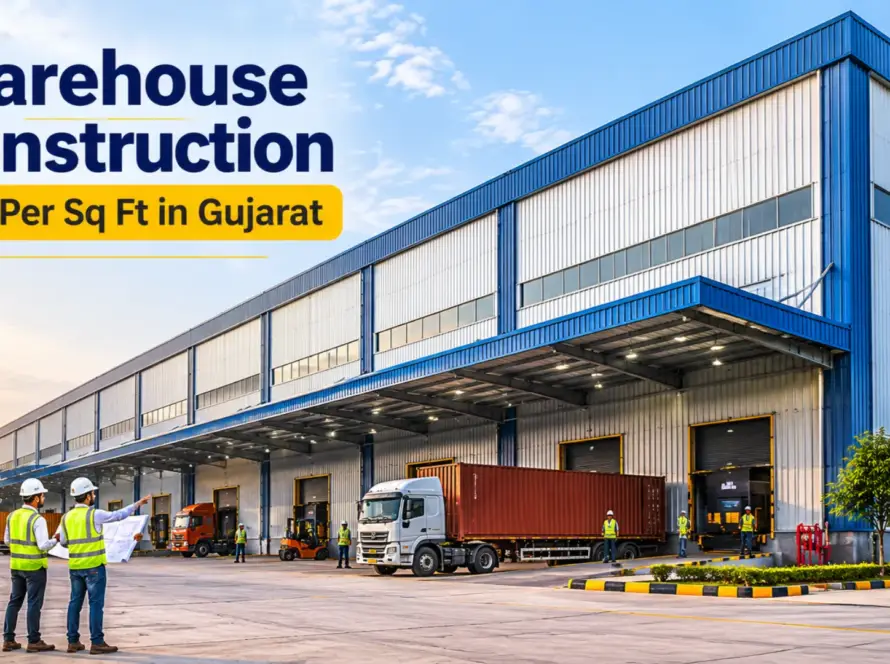
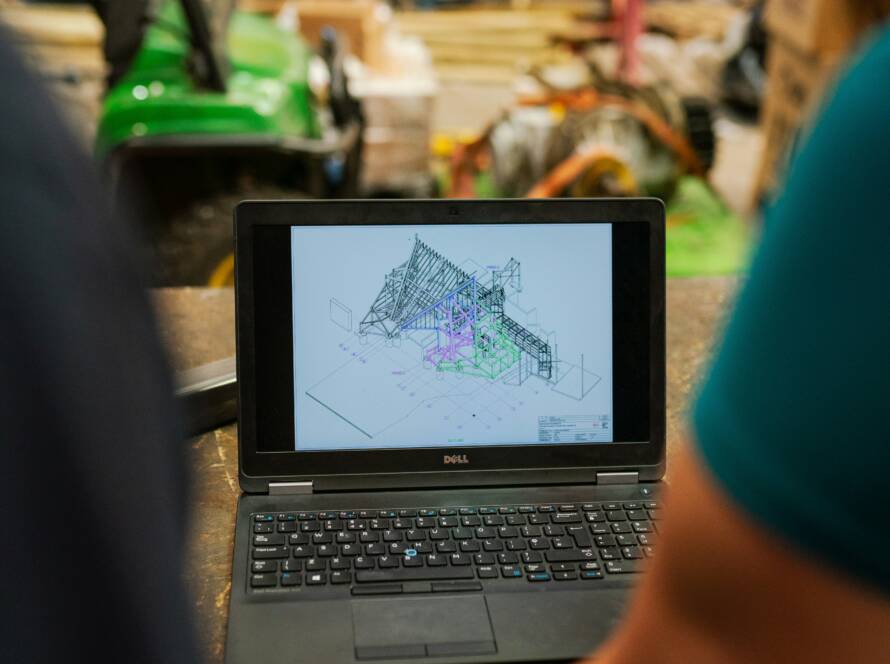
Industrial roofing systems are specially designed roofing solutions used for factories, warehouses, manufacturing plants, and large commercial buildings. These roofing systems are built to handle heavy weather conditions, provide long-term durability, and improve energy efficiency.
The benefits of industrial roofing systems go beyond protection — they also help businesses reduce maintenance costs, improve safety, and increase building performance. In this article, we will explore the key advantages, materials, and industries that rely on industrial roofing solutions.
What Are Industrial Roofing Systems?
Definition of Industrial Roofing
Industrial roofing refers to roofing systems designed specifically for large-scale industrial and commercial structures. Unlike residential roofing, industrial roofs are made to cover bigger areas and withstand more demanding conditions such as heat, rain, wind, chemical exposure, and heavy equipment loads.
Residential roofs are usually focused on appearance and basic weather protection, while industrial roofing systems prioritize durability, insulation, energy efficiency, and low maintenance. These roofs are often flat or low-sloped and are engineered for long-term industrial use.
Industrial roofing systems also support better drainage, temperature control, and structural strength, making them essential for industries that operate continuously throughout the year.
Common Materials Used
Different materials are used in industrial roofing depending on the building type, climate, and operational needs.
- Metal roofing – Strong, durable, and highly resistant to weather damage
- PEB roofing sheets – Commonly used in pre-engineered buildings for lightweight performance
- TPO roofing – Energy-efficient roofing membrane with heat-reflective properties
- EPDM membranes – Durable synthetic rubber roofing material suitable for flat roofs
- Polycarbonate sheets – Lightweight sheets that allow natural light inside industrial spaces
- Insulated panels – Improve thermal efficiency and help reduce energy costs
Industries That Use Industrial Roofing
Industrial roofing systems are widely used across many sectors because of their durability and performance benefits.
- Manufacturing plants
- Warehouses
- Logistics hubs
- Commercial facilities
- Factories
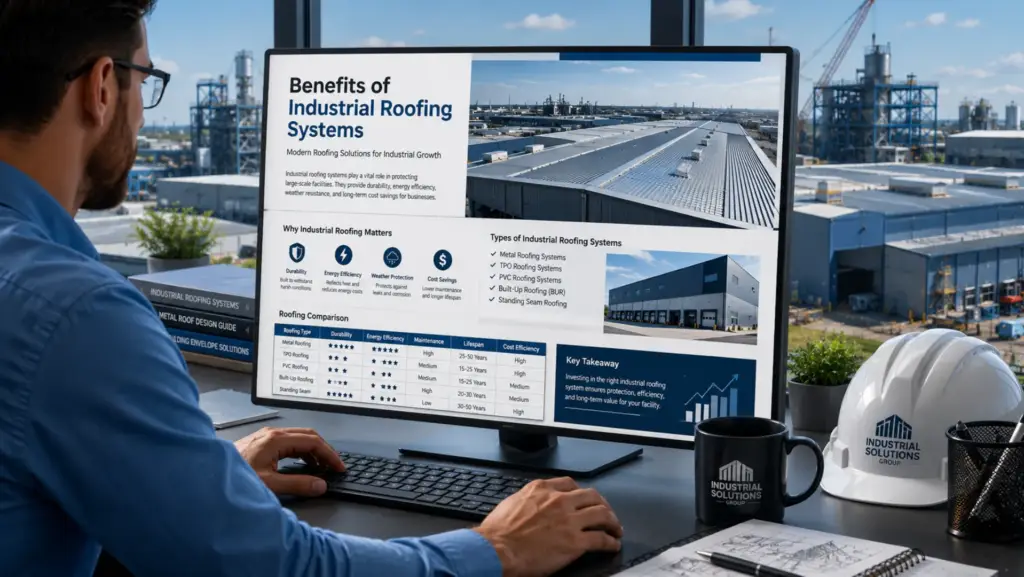
Top Benefits of Industrial Roofing Systems
Industrial roofing systems are designed to handle the demanding conditions of factories, warehouses, manufacturing plants, and commercial facilities. Choosing the right roofing solution not only protects the building but also improves efficiency, safety, and long-term savings. Below are some of the biggest benefits of industrial roofing systems.
Long-Term Durability
One of the main advantages of industrial roofing systems is their long-lasting durability. Industrial buildings are constantly exposed to heat, heavy rain, strong winds, dust, chemicals, and daily wear and tear. High-quality roofing materials are built to withstand these harsh conditions without losing performance.
Metal roofing, TPO, and EPDM systems are especially known for their strength and resistance to damage. With proper installation, industrial roofs can last for decades while maintaining structural stability and protection.
Energy Efficiency & Heat Reduction
Modern industrial roofing systems help reduce heat absorption and improve overall energy efficiency. Reflective roofing materials bounce sunlight away from the building, keeping indoor spaces cooler during hot weather.
This helps businesses lower cooling costs and maintain a more comfortable indoor temperature. Energy-efficient roofing is especially useful for factories and warehouses that operate large machinery or require temperature-controlled environments.
Weather & Waterproof Protection
Industrial roofs provide strong protection against rain, UV rays, wind, and extreme weather conditions. Waterproof roofing systems prevent water leakage, which helps avoid structural damage, rust, mold growth, and equipment loss.
A properly installed roofing system also protects inventory, machinery, and employees from weather-related issues, making it an essential investment for industrial properties.
Low Maintenance Requirements
Another major benefit of industrial roofing systems is their low maintenance needs. Durable materials reduce the frequency of repairs and minimize unexpected roofing problems.
Because these roofing systems have a long lifespan, businesses spend less money on ongoing maintenance and replacement work over time. This makes industrial roofing a cost-effective long-term solution.
Improved Workplace Safety
Industrial roofing systems also contribute to workplace safety. Many roofing materials are fire-resistant and designed to provide better structural support.
Strong roofing systems reduce the risk of collapse, leaks, and accidents inside the facility. This creates a safer environment for workers, machinery, and stored products.
Cost Savings Over Time
Although industrial roofing installation may require an initial investment, it delivers significant savings in the long run. Businesses can reduce utility bills through better insulation and energy efficiency.
Additionally, durable roofing materials lower repair and replacement costs, resulting in a higher return on investment (ROI) over the life of the roof.
Eco-Friendly & Sustainable Benefits
Many industrial roofing systems are environmentally friendly and support sustainable building practices. Several roofing materials are recyclable and compatible with solar panel installations.
Energy-efficient roofing also helps reduce the building’s carbon footprint by lowering energy consumption. This makes industrial roofing systems a smart choice for companies focused on sustainability.
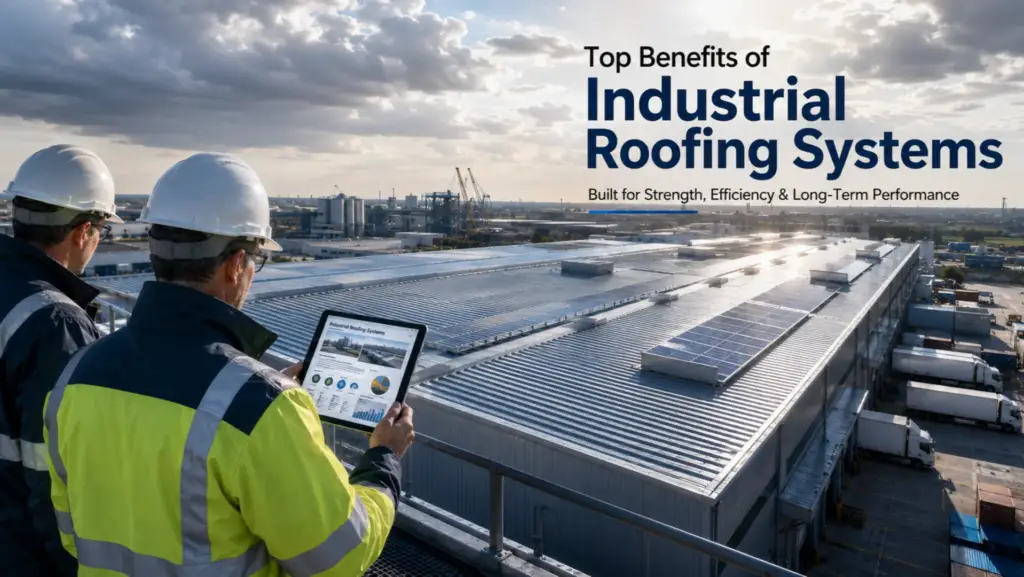
Types of Industrial Roofing Systems
Different industrial buildings require different roofing solutions depending on usage, climate, and budget. Here are some common industrial roofing systems and their ideal applications.
| Roofing Type | Key Benefits | Best For |
|---|---|---|
| Metal Roofing | Durable & weather resistant | Factories |
| TPO Roofing | Energy efficient | Warehouses |
| EPDM Roofing | Waterproof protection | Large buildings |
| Polycarbonate Roofing | Natural light entry | Industrial sheds |
| Insulated Panels | Temperature control | Cold storage units |
Choosing the Right Roofing Type
Selecting the right industrial roofing system depends on several important factors. Climate conditions play a major role because some materials perform better in extreme heat, rainfall, or cold temperatures.
Budget is another important consideration, as roofing systems vary in installation and maintenance costs. Building usage should also be evaluated carefully. For example, warehouses may require energy-efficient roofing, while cold storage facilities need superior insulation.
Lastly, businesses should consider long-term maintenance expectations to ensure the roofing system remains durable, efficient, and cost-effective for years to come.
Industrial Roofing vs Traditional Roofing
Choosing between industrial roofing and traditional roofing depends on the building’s purpose, durability needs, and long-term maintenance goals. Industrial roofing systems are specifically designed for factories, warehouses, and commercial facilities where strength and efficiency matter the most.
| Feature | Industrial Roofing | Traditional Roofing |
|---|---|---|
| Lifespan | Longer | Moderate |
| Maintenance | Low | Higher |
| Energy Efficiency | High | Medium |
| Load Capacity | Strong | Limited |
| Weather Resistance | Excellent | Average |
Industrial roofing performs better in demanding environments because it offers stronger structural support, improved insulation, and better protection against harsh weather conditions. Traditional roofing may work well for smaller residential structures, but industrial buildings require roofing systems built for heavy-duty performance.
Key Takeaway:
Industrial roofing is designed for durability, operational efficiency, and long-term performance, making it a smarter investment for industrial and commercial properties.
Pros and Cons of Industrial Roofing Systems
Industrial roofing systems provide several long-term benefits for businesses, manufacturing units, and commercial buildings. However, like any major investment, they also come with a few challenges.
Pros
- Durable and built for long-term use
- Energy efficient and helps reduce cooling costs
- Excellent weather resistance in harsh conditions
- Requires low maintenance compared to traditional roofing
- Longer lifespan with proper installation
- Improves workplace and industrial safety
Cons
- Higher initial installation cost
- Requires professional installation and expertise
- Choosing the right material can sometimes be complex
Mini Conclusion
Although industrial roofing systems may involve a higher upfront investment, their durability, energy savings, and low maintenance needs make them highly cost-effective over the long term.
Why Professional Installation Matters
Benefits of Hiring Experts
Choosing experienced professionals for industrial roofing installation is essential for long-term performance and safety. Expert installers understand the right materials, techniques, and structural requirements needed for industrial buildings. This helps businesses avoid future roofing problems and ensures better overall results.
Key Benefits of Hiring Experts:
- Proper installation quality for long-lasting performance
- Better durability and resistance against weather damage
- Warranty protection from manufacturers and contractors
- Compliance with safety standards and building regulations
Risks of Poor Installation
Poor roofing installation can create serious problems for industrial facilities. Even high-quality roofing materials may fail if installed incorrectly. Common issues include water leakage, weak structural support, and faster wear and tear. These problems often lead to expensive repairs and increased maintenance costs over time. Improper installation can also affect workplace safety and reduce the overall lifespan of the roofing system.
Conclusion
Industrial roofing systems offer several long-term benefits for commercial and industrial buildings. They improve durability, increase energy efficiency, reduce maintenance costs, and provide better protection against harsh weather conditions. Choosing the right roofing system and ensuring professional installation can help businesses save money while improving building performance. Investing in a high-quality industrial roofing solution is a smart decision for long-term reliability and operational efficiency.