If you’re building a warehouse, factory, or cold storage unit using pre-engineered steel, understanding fire-rated PEB structures and fire safety compliance isn’t something you can sort out after the structure goes up. Fire departments across India are getting stricter about what they’ll approve, insurers are asking harder questions before they issue a policy, and a Fire NOC delay can hold up your entire project.
This guide walks through what fire-rated PEB structures and fire safety compliance actually mean for your building, which Indian codes apply, what it costs, what documentation your manufacturer should be giving you, and what’s changing in enforcement that you need to know about — whether you’re planning a new build or already running a facility.
Why Fire-Rated PEB Structures and Fire Safety Compliance Matter
Steel is strong, but it behaves badly in a fire. Once temperatures climb high enough, unprotected steel loses its structural strength fast — a lot faster than most people expect — and that’s exactly when you don’t want your building’s frame giving way. This is why fire-rated PEB structures and fire safety compliance matter so much for pre-engineered buildings specifically.
It’s not just about slowing down flames; it’s about buying enough time for people to get out safely and for firefighters to do their job before the structure itself becomes a hazard.
For industrial buildings especially, the stakes go beyond life safety. A fire that takes down your structure also takes down your inventory, your equipment, and potentially weeks or months of downtime while you rebuild. Getting fire protection right at the design and manufacturing stage — not as an afterthought — is what separates a compliant, insurable building from one that becomes a liability the moment something goes wrong.
NBC 2016 and IS Codes That Govern Fire-Rated PEB in India
NBC 2016 Part 4 — The Core Framework
The National Building Code of India, specifically Part 4, is the foundation that most state fire safety rules are built on. It sets out technical requirements covering fire detection, firefighting systems, evacuation routes, structural fire safety, and compartmentation — essentially, how a building should be designed and equipped so a fire stays contained and people can get out.
When your state fire department reviews your building plans for a Fire NOC, they’re checking your design against these NBC provisions, even if the exact wording of the local rule differs slightly from state to state.
IS Codes Specific to Steel Structural Fire Protection
Alongside NBC 2016, several Indian Standards (IS codes) come into play depending on what fire safety systems your building needs. IS 2189 covers fire alarm systems, IS 15105 deals with fire suppression system design, and IS 1641 and IS 1642 set out fire safety provisions for buildings more broadly, including general construction and materials of construction respectively.
Together with NBC, these codes form the technical backbone of fire-rated PEB structures and fire safety compliance in India — and they matter because they determine what detection, suppression, and structural fire safety measures your design needs to include before it can pass fire department review.
Your structural consultant or PEB manufacturer should be referencing these codes directly when they prepare your fire safety drawings — not just citing NBC in general terms.
State Fire Services Acts and Local Variation
Here’s something that trips a lot of people up: NBC sets the baseline, but each state has its own Fire Services Act, and Gujarat is no exception. The exact process for applying for a Fire NOC, the documents required, and how inspections are carried out can vary from what you’d experience in Maharashtra or Delhi.
If you’re building in Vadodara, Ahmedabad, Surat, or elsewhere in Gujarat, it’s worth checking directly with the state fire department or working with a manufacturer who’s already navigated the local process, rather than assuming national guidelines alone will get you through approval.
Fire-Rated PEB Requirements by Industry
Not every PEB needs the same level of fire protection. NBC classifies buildings by occupancy type, and what’s required for a warehouse looks different from what’s required for a cold storage facility or a manufacturing unit.
Warehousing and Logistics Facilities
Warehouses typically fall under NBC’s storage occupancy classification, and the level of fire protection required often depends on what’s being stored inside. A warehouse holding packaged consumer goods has different requirements than one storing flammable or hazardous materials.
Compartmentation — dividing large storage areas into fire-contained sections — becomes especially important here, since a single open warehouse floor can let a fire spread quickly across the entire structure.
Cold Storage Units
Cold storage facilities bring an added layer of complexity because of the insulation materials used to maintain low temperatures. Some insulation types are more combustible than others, so fire-rated design for cold storage needs to account for both the structural steel and the insulation system working together, not just one or the other. This is an area where getting expert input during design matters more than in a standard warehouse build.
Manufacturing and Industrial Units
Manufacturing units, especially those handling machinery, chemicals, or processes that generate heat, tend to fall under industrial occupancy classifications that carry stricter fire safety expectations. Depending on what’s manufactured on-site, you may need higher fire-resistance ratings on structural elements, more robust suppression systems, and clearer emergency egress planning built into the layout from day one.
What Documentation Your PEB Manufacturer Should Provide for Fire NOC Approval
Fire-Resistance Test Certificates and Material Compliance Reports
A reliable PEB manufacturer should be able to hand you test certificates confirming that the materials used — coatings, insulation, cladding — actually meet the fire-resistance ratings they’re claimed to have. These aren’t just paperwork for your files; fire departments often want to see this documentation as part of the NOC application process, and without it, your approval can stall.
Structural Fire Safety Drawings for NOC Submission
Beyond material certificates, you’ll need structural drawings that clearly show how fire safety has been built into the design — compartmentation, fire-rated walls or barriers, and how the building’s structural elements are protected. A manufacturer who prepares these drawings correctly the first time saves you from back-and-forth revisions with the fire department, which can otherwise drag a project timeline out by weeks.
Why Buyers Should Ask for This Upfront
Here’s the honest truth: not every PEB manufacturer proactively hands over this documentation unless you ask for it. As a buyer, it’s worth requesting fire-resistance test certificates and NOC-ready structural drawings before you finalize your order — not after construction is done.
If a manufacturer can’t produce this documentation readily, that’s a signal worth paying attention to. It’s not an extra ask; it’s part of what fire-rated PEB structures and fire safety compliance should look like as standard, not an optional upgrade.
The Real Cost of Fire-Rated PEB Components in India
Intumescent Coatings — Price Range and What Affects Cost
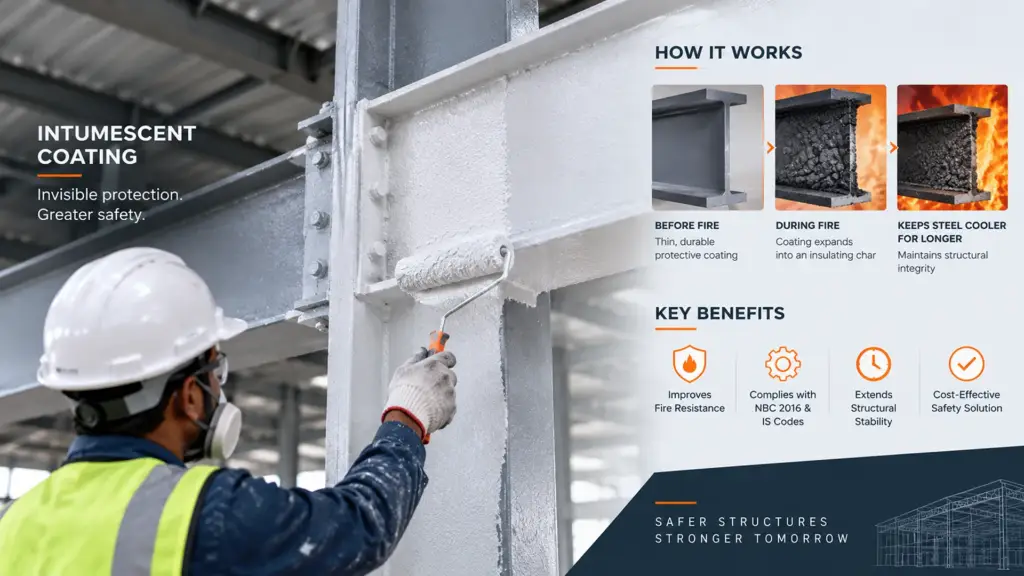
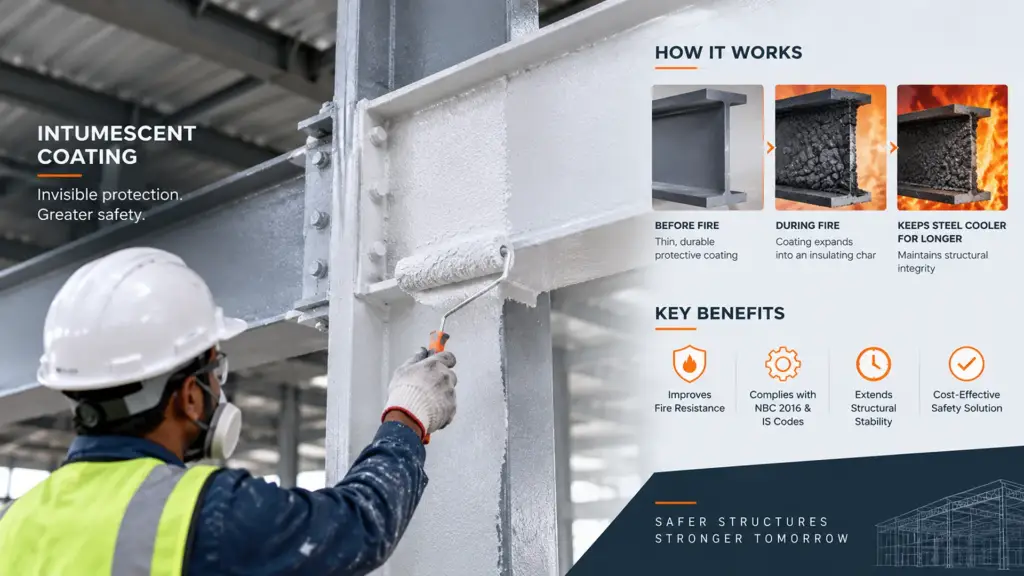
Intumescent coatings — the coatings that expand under heat to insulate steel and slow structural failure — are one of the more common ways PEB manufacturers add fire resistance to steel frames. The cost of these coatings depends on the coating thickness required (which is driven by how many hours of fire resistance you need), the surface area being covered, and the specific product used. It’s a cost that scales with your fire-rating requirement, so a 2-hour rating will typically cost more to achieve than a 1-hour rating.
Fire-Rated Cladding vs. Standard Cladding — Price Delta
Fire-rated cladding panels cost more than standard cladding, largely because of the materials and manufacturing process involved in achieving the required fire performance. The exact price difference varies by supplier and specification, so it’s worth getting a direct quote comparison from your manufacturer for both options rather than assuming a fixed percentage markup.
Fire-Rated Insulation Costs
Insulation costs follow a similar pattern — fire-rated insulation materials generally cost more than standard insulation, and the gap depends on the rating required and the type of material specified for your building’s use case.
Cost of Compliance vs. Cost of Non-Compliance
It’s worth stepping back and looking at the bigger picture here. The cost of fire-rated components is a real, upfront expense — but it’s a fraction of your total project cost. Non-compliance, on the other hand, can mean a denied occupancy certificate, held-up operations, insurance complications, and in the worst cases, legal liability if something goes wrong. Viewed that way, fire-rated components aren’t really an optional upgrade — they’re part of what makes your building usable and insurable in the first place.
2026 Enforcement Changes Industrial PEB Owners Should Know
From Self-Certification to Verified Compliance
Fire safety enforcement in India is shifting. Several states have moved away from a system where builders largely self-certified compliance, toward one that requires ongoing, verified proof. Some states now require annual external fire safety audits for certain building categories, and there’s a broader push toward digital fire safety certification, making it easier for authorities to track whether a building’s compliance is current rather than a one-time box that got ticked at construction.
Insurance and Lender Implications
This shift isn’t just a regulatory matter — it’s showing up in insurance and lending too. Fire insurance underwriters are increasingly asking for evidence of functioning fire safety systems, not just proof that equipment was installed at some point. That means outdated AMC records or an expired Fire NOC can affect your ability to get or renew coverage, and in some cases, your ability to secure financing.
What This Means If You Already Own a PEB Facility
If your PEB facility was built a few years ago and passed its initial Fire NOC, that doesn’t necessarily mean you’re covered under today’s enforcement standards. It’s worth checking whether your state has introduced new audit or renewal requirements since your building was approved, and making sure your fire safety systems — and the paperwork behind them — are actually up to date, not just installed and forgotten.
FAQs
It’s a pre-engineered steel building designed and constructed with materials and systems — like fire-resistant coatings, rated cladding, and compartmentation — that help it withstand fire for a specified period, giving occupants time to evacuate and reducing structural collapse risk.
Yes, most non-residential and industrial buildings in Gujarat require a Fire NOC from the state fire department, in line with NBC provisions and the state’s own Fire Services Act. Requirements can vary based on building size, height, and use, so it’s best to confirm specifics with local authorities.
Costs vary based on the fire-resistance rating required, the cladding material specified, and your supplier. It’s best to get a direct quote comparing standard and fire-rated cladding for your specific project.
Relevant codes include IS 2189 for fire alarm systems, IS 15105 for fire suppression system design, and IS 1641 and IS 1642 for general fire safety provisions in building construction, alongside NBC 2016 Part 4 as the overarching framework.
It depends on your state. Several states have introduced stricter audit and renewal requirements in recent years, so existing facility owners should check whether their compliance status and documentation are still current under today’s rules.
Conclusion
Fire-rated PEB structures and fire safety compliance isn’t a single checkbox — it’s a combination of the right materials, the right documentation, and staying current as enforcement rules evolve. The decisions that matter most happen early, at the design and manufacturing stage, which is exactly why the manufacturer you choose plays such a big role in how smoothly your Fire NOC approval goes.
If you’re planning a PEB build in Gujarat and want a manufacturer who builds fire-rated PEB structures and fire safety compliance in from the start — documentation included — that’s a conversation worth having before you finalize your design.