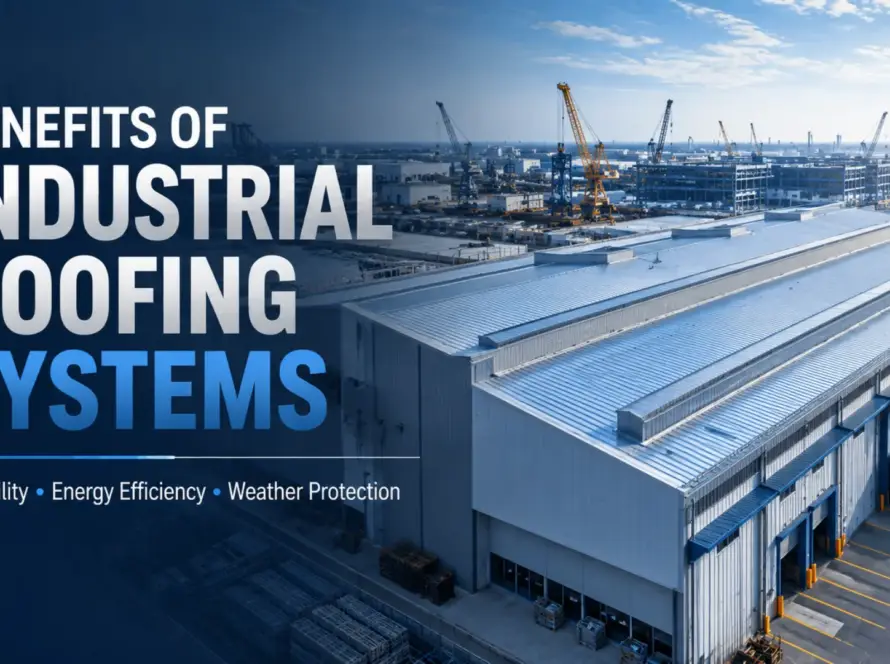
Pre-Engineered Buildings (PEBs) have become one of the most popular construction solutions for industrial, commercial, agricultural, and warehouse projects. Unlike traditional construction methods, PEBs are designed and manufactured in a controlled factory environment before being assembled on-site. This approach offers faster construction, cost efficiency, structural reliability, and design flexibility, making PEBs a preferred choice for businesses worldwide.
As industries continue to expand and demand durable infrastructure, the adoption of pre-engineered buildings has grown significantly. From manufacturing plants and logistics centers to aircraft hangars and retail facilities, PEBs are being used in a wide range of applications where strength, speed, and long-term value are important.
One of the most common questions building owners and investors ask is: How long does a pre-engineered building last? The simple answer is that a well-designed and properly maintained PEB can typically last 30 to 50 years or more. In many cases, high-quality pre-engineered structures have been known to remain functional for 60 years or longer, especially when built using premium materials and protected through regular maintenance.
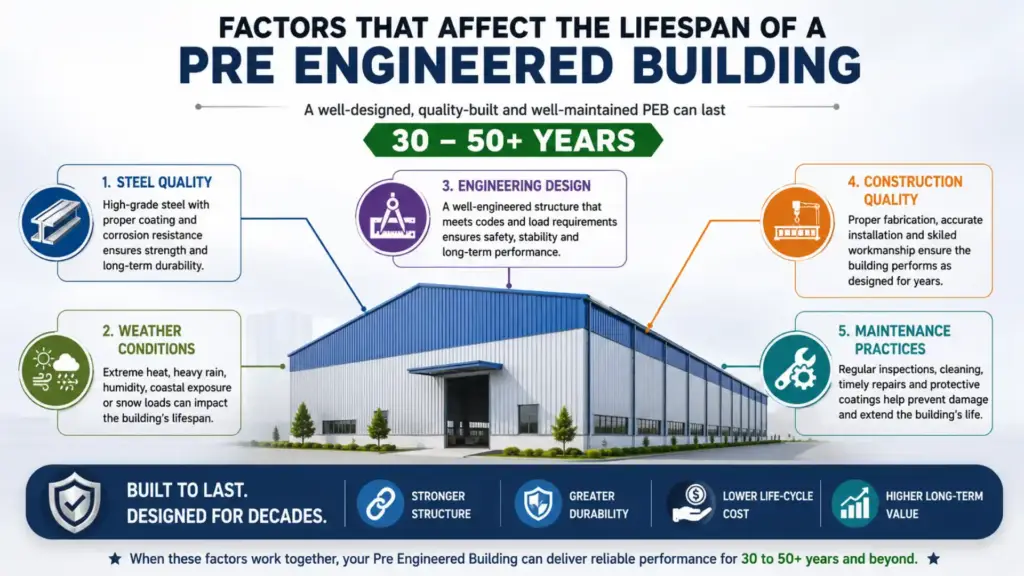
However, the lifespan of a PEB is not determined by a single factor. Several elements play an important role in how long the structure will perform effectively. These include the quality of steel used, structural design standards, environmental conditions, corrosion protection systems, roof and wall cladding materials, construction quality, and ongoing maintenance practices.
Understanding these factors can help building owners maximize the service life of their investment while minimizing repair and replacement costs over time. In the following sections, we will explore what affects the longevity of a pre-engineered building and how you can ensure your PEB remains strong, safe, and efficient for decades.
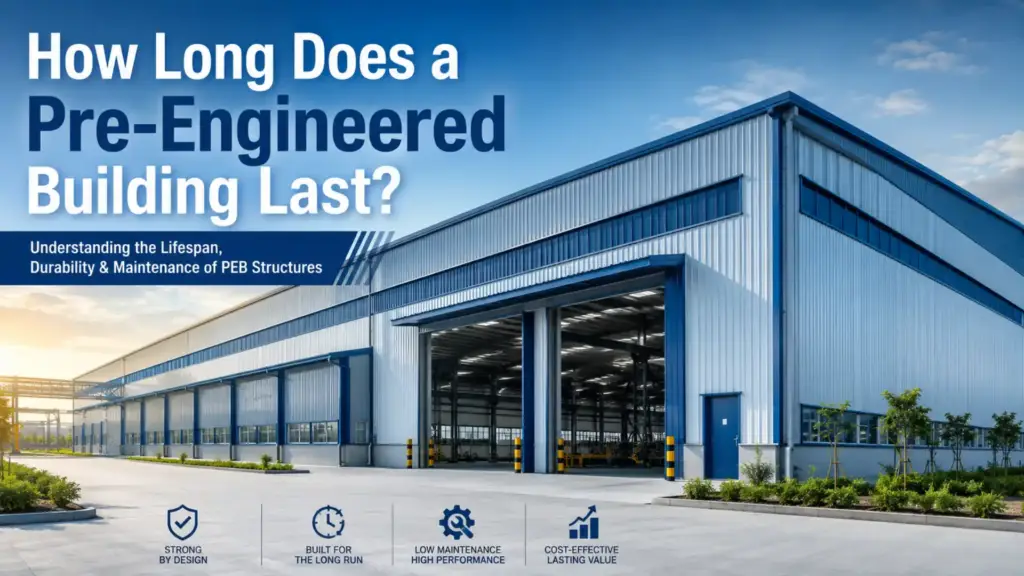
What Is the Average Lifespan of a Pre Engineered Building?
Typical Service Life of a PEB
One of the most common questions building owners ask is how long a pre engineered building will last. In most cases, a well-designed and properly maintained PEB can serve for 30 to 50 years or more. Many industrial facilities, warehouses, manufacturing plants, and commercial buildings continue to perform efficiently even beyond this range when maintenance is carried out regularly.
The lifespan of a PEB largely depends on the quality of materials used and the conditions in which the building operates. Structural steel, which forms the primary framework of a pre engineered building, is known for its excellent strength and durability. Unlike traditional construction materials that may crack or deteriorate over time, steel maintains its structural integrity for decades when protected against corrosion.
Why Modern PEBs Last Longer
Modern pre engineered buildings are designed using advanced engineering techniques that improve load distribution, structural performance, and overall durability. High-grade steel used in today’s PEBs offers better strength and resistance to wear compared to older materials.
In addition, protective coatings, galvanized finishes, and corrosion-resistant treatments help shield steel components from moisture, chemicals, and harsh weather conditions. These advancements significantly extend the service life of the building while reducing maintenance requirements.
Key Takeaway: The lifespan of a pre engineered building depends on design quality, environmental conditions, and maintenance practices. With proper planning and care, a PEB can remain safe, reliable, and cost-effective for several decades.
Factors That Affect the Lifespan of a Pre Engineered Building
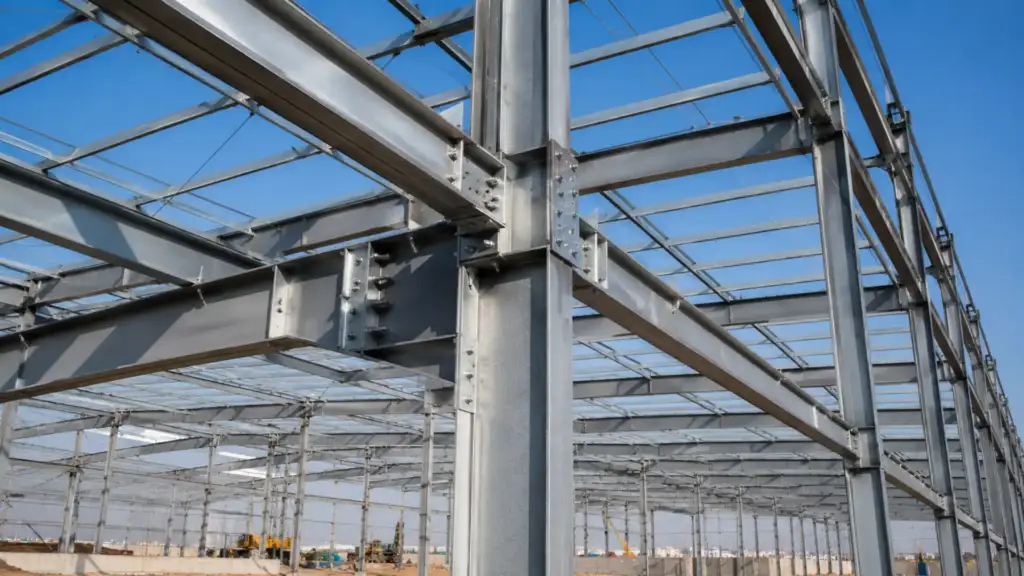
The lifespan of a pre engineered building depends on much more than just the steel frame. While a well-designed PEB can last 40 to 60 years or even longer, several factors play an important role in determining how long the structure remains safe, durable, and cost-effective. Understanding these factors helps building owners maximize the value of their investment and reduce long-term repair costs.
Quality of Steel and Raw Materials
The quality of materials used during manufacturing is one of the biggest factors affecting a building’s lifespan. Certified structural steel provides the strength and reliability needed for long-term performance. High-quality steel is manufactured according to industry standards, ensuring it can handle loads and environmental stresses without premature deterioration.
Corrosion resistance is equally important. Protective coatings, galvanized steel, and quality paint systems help prevent rust formation. When inferior materials are used, corrosion can begin much earlier, reducing the building’s durability and increasing maintenance requirements.
Environmental and Weather Conditions
The location of a building has a direct impact on its longevity. Coastal areas expose structures to salt-laden air, which accelerates corrosion if proper protective measures are not in place. High-humidity regions can also contribute to moisture-related issues over time.
Industrial zones present another challenge. Exposure to chemicals, pollutants, and airborne contaminants may gradually affect steel surfaces and protective coatings. Buildings designed for these environments typically require additional corrosion protection and more frequent inspections.
Engineering Design Standards
A properly engineered structure is built to withstand local environmental conditions. Wind load calculations ensure the building can resist strong storms and high-speed winds. Seismic-resistant designs help protect structures in earthquake-prone regions.
Accurate structural calculations are essential for distributing loads safely throughout the building. Poor design decisions can lead to stress concentrations, structural fatigue, and reduced service life.
Construction and Installation Quality
Even the best design can fail if installation is not performed correctly. Proper fabrication and erection ensure all components fit together as intended. High-quality foundations are equally important because they provide the stability needed to support the entire structure for decades.
Maintenance Practices
Regular maintenance significantly extends the life of a pre engineered building. Scheduled inspections help identify minor issues before they become major problems. Preventive maintenance programs, including cleaning, repainting, fastener checks, and corrosion control, help keep the structure in excellent condition and ensure long-term performance.
How to Increase the Life of a Pre Engineered Building
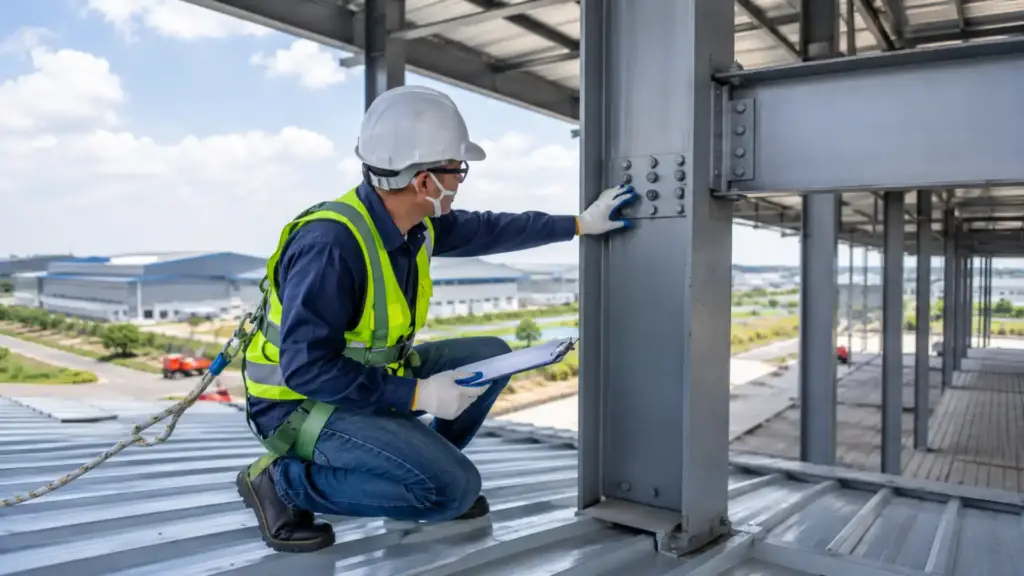
A well-designed pre engineered building can last for decades, but its lifespan depends heavily on proper maintenance. Regular upkeep helps prevent small issues from becoming major structural problems and ensures the building remains safe, durable, and cost-effective over the years.
Regular Structural Inspections
Routine structural inspections are one of the most effective ways to extend the life of a pre engineered building. Inspections help identify early signs of wear, corrosion, loose connections, cracks, or any structural weakness before they become serious concerns. Annual inspections by qualified professionals can detect hidden issues and help maintain the building’s structural integrity.
Protective Coatings and Repainting
Steel components are exposed to environmental conditions that can lead to corrosion over time. Applying protective coatings and repainting when necessary creates a barrier against moisture, chemicals, and harsh weather. This simple maintenance step significantly reduces the risk of rust and helps preserve the strength and appearance of the structure.
Roof and Drainage Maintenance
Proper roof and drainage maintenance is essential for preventing water accumulation. Blocked gutters, damaged roofing sheets, or poor drainage can cause leaks and moisture-related damage. Regular cleaning and inspection ensure that rainwater flows away efficiently and does not affect the building’s structural components.
Prompt Repair of Minor Issues
Small problems such as loose bolts, minor rust spots, or damaged panels should never be ignored. Addressing these issues quickly prevents costly structural damage and reduces the need for major repairs in the future.
Maintenance Checklist
- Conduct a comprehensive annual structural inspection.
- Check the roof regularly for leaks, damage, or debris buildup.
- Inspect bolts, fasteners, and structural connections for looseness.
- Treat rust immediately and reapply protective coatings when needed.
- Ensure gutters and drainage systems remain clean and functional.
Common Signs a PEB Needs Maintenance or Repairs
Like any structure, a Pre-Engineered Building (PEB) requires regular inspections and timely maintenance to stay in good condition. Spotting small issues early can prevent expensive repairs later.
Some of the most common warning signs include visible rust or corrosion on steel components, which can weaken the structure over time if left untreated. Roof leaks are another clear indication that maintenance is needed, as water intrusion can damage insulation, interiors, and structural elements. Bent, cracked, or damaged structural members should never be ignored because they may affect the building’s strength and stability.
You should also watch for loose bolts and connections, especially in areas exposed to vibration, wind, or heavy usage. Water pooling around the structure is another concern, as poor drainage can lead to foundation issues and corrosion.
Taking action early helps keep repair costs lower, extends the building’s lifespan, and improves overall safety for occupants and operations. Regular inspections ensure that minor problems are fixed before they become major structural concerns.
PEB vs Conventional Buildings: Which Lasts Longer?
When comparing a Pre-Engineered Building (PEB) with a conventional building, lifespan is only one part of the decision. Both construction methods can provide decades of reliable service when designed, built, and maintained properly. However, their performance, cost, and flexibility can differ significantly over time.
| Feature | PEB | Conventional Building |
|---|---|---|
| Average Lifespan | 30–50+ Years | 40–60 Years |
| Construction Speed | Faster | Slower |
| Maintenance Requirements | Lower | Moderate |
| Expansion Flexibility | Easy | Difficult |
| Cost Efficiency | High | Moderate |
Conventional buildings may have a slightly longer average lifespan due to their heavy concrete and masonry construction. However, modern PEB structures are engineered with high-quality steel, protective coatings, and advanced manufacturing processes that allow them to last for several decades with proper maintenance.
When evaluating the total cost of ownership, PEBs often provide better value. Their faster construction time reduces project delays, while lower maintenance requirements help save money throughout the building’s life cycle. In addition, repairs and modifications are generally simpler and more affordable.
For industrial projects, warehouses, factories, and commercial facilities, long-term value is often more important than lifespan alone. PEBs offer excellent durability, lower operating costs, and easy future expansion options. As business needs change, additional bays or extensions can be added with minimal disruption, making PEBs a practical and cost-effective choice for long-term industrial use.
Industries That Benefit Most from Long-Lasting PEB Structures
Many industries rely on long-lasting Pre-Engineered Buildings (PEBs) because they provide strength, flexibility, and cost savings over the long term. Manufacturing plants use PEBs to create large production spaces without unnecessary structural obstacles. Warehouses and logistics centers benefit from wide-span designs that maximize storage and operational efficiency. Cold storage facilities prefer PEB structures because they can easily accommodate insulation systems and temperature-controlled environments. Industrial workshops use PEBs for their durability and quick construction timelines, while aircraft hangars require the large, column-free spaces that PEBs can provide.
These industries prefer PEBs because they offer excellent durability, making them suitable for demanding operating conditions. PEBs are also highly scalable, allowing businesses to expand as their needs grow. In addition, their cost efficiency helps reduce both construction and maintenance expenses, making them a practical long-term investment.
Frequently Asked Questions
A well-designed and properly maintained steel PEB can typically last between 30 and 50 years. The actual lifespan depends on factors such as material quality, environmental conditions, design standards, and maintenance practices.
Yes. Many modern pre-engineered buildings are designed to exceed 50 years of service life. With high-quality steel, protective coatings, and regular inspections, a PEB can remain structurally sound for several decades.
Yes, rust and corrosion can affect the durability of steel components if left untreated. However, galvanized steel, protective paint systems, and routine maintenance significantly reduce the risk of corrosion and help extend the building’s lifespan.
Regular maintenance includes inspecting the roof, checking for signs of corrosion, cleaning drainage systems, tightening fasteners, and repairing damaged coatings. These simple steps help keep the structure in excellent condition.
Absolutely. PEBs are widely used for factories, warehouses, manufacturing units, logistics centers, and other heavy industrial facilities because of their strength, durability, and ability to handle large spans and heavy loads.
Conclusion
So, how long does a pre engineered building last? In most cases, a well-designed and properly maintained PEB can easily serve for 30 to 50 years or even longer. Its lifespan depends on several factors, including the quality of materials used, structural engineering standards, environmental conditions, and regular maintenance practices.
Investing in high-quality steel, protective coatings, and professional construction significantly improves the durability and performance of the building over time. Routine inspections and timely repairs also help prevent small issues from becoming costly problems.
For industrial, commercial, and warehouse projects, PEBs continue to be one of the most durable, efficient, and cost-effective construction solutions available today. To maximize the lifespan and value of your building, always work with experienced PEB professionals for expert design, construction, and maintenance support.