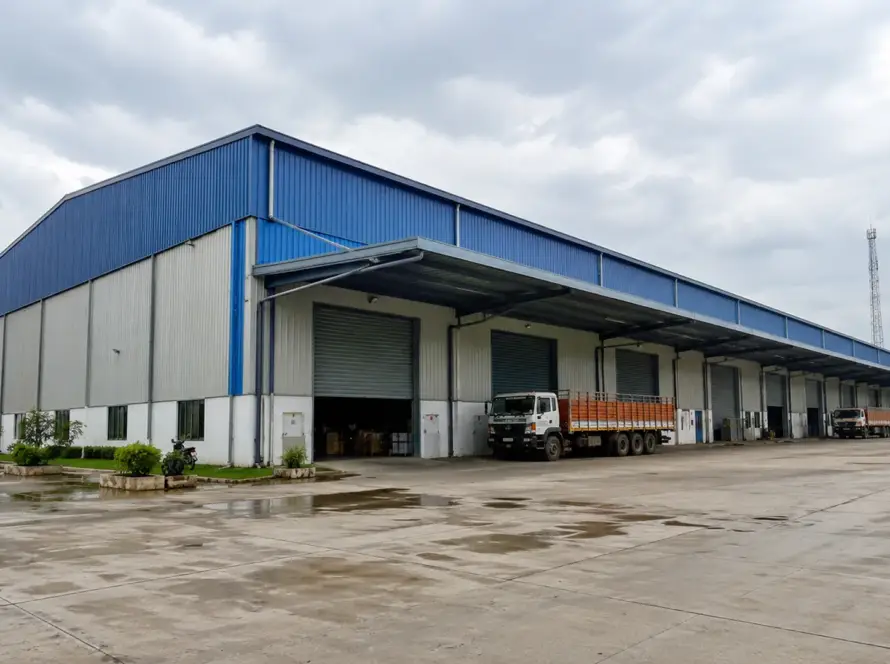
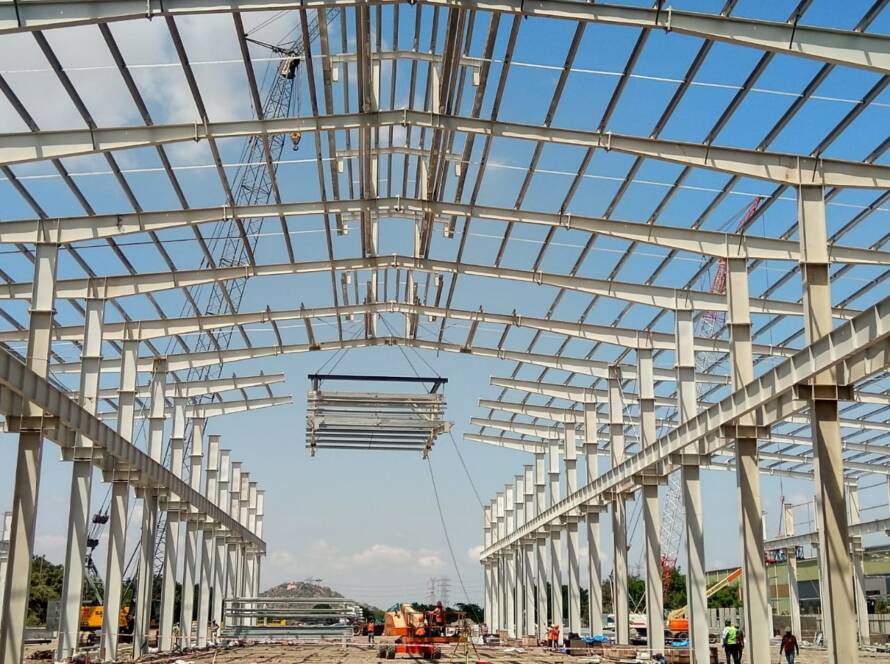
If you’re searching for a PEB manufacturer in Ankleshwar/Bharuch, chances are you’ve already noticed most of what shows up in search is either a product listing or a page that could just as easily say “Kolkata” instead of “Ankleshwar” with a find-and-replace. This region has its own conditions — chemical exposure, humidity, monsoon load — and those conditions should shape how your structure is built and who builds it. Here’s what actually matters if you’re building or expanding here.
Why a PEB Manufacturer in Ankleshwar/Bharuch Needs a Different Spec Than Other Regions
Ankleshwar is one of Gujarat’s largest chemical and pharmaceutical manufacturing clusters, and that changes what a building needs to survive. A PEB spec that works fine for a dry-goods warehouse in Rajkot isn’t necessarily right for a shed sitting next to a chemical processing unit.
This is exactly where a good PEB manufacturer in Ankleshwar/Bharuch should be doing more than swapping out a city name on a template — two things matter most here: what the steel is coated with, and whether the design actually clears fire and pollution board requirements before you break ground.
Corrosion-Resistant Coatings for Chemical & Pharma Zones
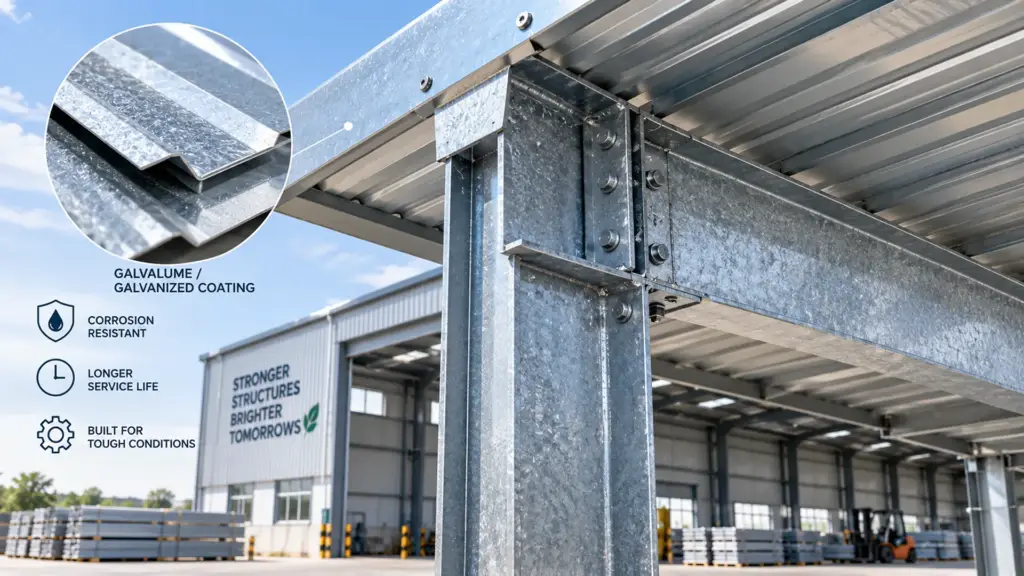
Airborne chemical fumes and high humidity speed up corrosion on untreated or lightly coated steel. For structures in or near the GIDC chemical estate, it’s worth asking your manufacturer specifically about the coating grade — galvanized or galvalume steel with adequate coating thickness holds up far better in this kind of atmosphere than standard mild steel. This isn’t a detail to leave to the fabricator’s default spec; it’s worth confirming upfront, since re-coating or repairing corroded steel later costs far more than getting the grade right at the design stage.
Fire Safety & GPCB Compliance Basics
Any new structure in this belt will eventually need sign-off from the Gujarat Pollution Control Board and local fire authorities, especially if it’s attached to a chemical or process unit. This isn’t unique to PEB construction, but it does affect design choices — things like material selection, ventilation, and clearances need to be planned with these approvals in mind from day one, not bolted on after the structure is built. Bringing your manufacturer into that conversation early saves a lot of rework.
PEB vs RCC: Which Makes Sense for Your GIDC Expansion?
If you’re expanding an existing unit, this is probably the real decision on your plate — not “which manufacturer” but “which construction method.” Both have a place, and the right answer depends on what you’re building.
When PEB Wins
PEB makes the most sense when speed and floor space matter most. It’s typically faster to construct than RCC, which matters if downtime during expansion is costing you production. It also gives you large clear spans without internal columns, which is useful if you need to rearrange heavy machinery or production lines later. For factory sheds, warehouses, and godowns, PEB is generally the more cost-efficient route per square foot of usable space — which is a big part of why demand for a reliable PEB manufacturer in Ankleshwar/Bharuch has grown alongside the region’s industrial expansion.
When RCC Still Makes Sense
RCC still has an edge in a few situations — multi-storey structures where you need significant floor-to-floor load capacity, or cases where a specific fire rating or plot regulation calls for concrete construction. If your expansion involves stacking floors rather than adding floor area, it’s worth having that conversation with your structural engineer before assuming PEB is the default.
Quick Decision Checklist
- Do you need the space fast, or is timeline flexible?
- Is this a single large-span shed, or a multi-storey addition?
- Does your plot or fire NOC have specific construction-type requirements?
- Will machinery layout need to change again in the next few years?
- Is long-term chemical exposure a major factor for this specific structure?
Realistic Cost & Timeline for PEB Construction in This Region
[Note for Sophia: I haven’t included specific per-sq-ft pricing or a fixed timeline here, since I don’t have verified current figures for Devashish’s actual rates — and per the “no fabricated facts/stats” rule, I didn’t want to guess a number. This section needs real inputs from the team: a rough cost range (even “starts from ₹X per sq ft” with the variables noted) and a realistic design-to-handover timeline. Once you share those, I can drop them in — this is genuinely the section most likely to outperform competitors, since nobody else discloses even a rough range.]
Costs vary depending on span width, load requirements, coating grade, and site accessibility — a chemical-grade coated structure will naturally cost more than a standard shed. Rather than quoting a number that doesn’t hold up site to site, the more useful approach is a short site assessment, which gives you an accurate estimate based on your actual requirements rather than a generic online figure.
Our Process — From Site Visit to Handover
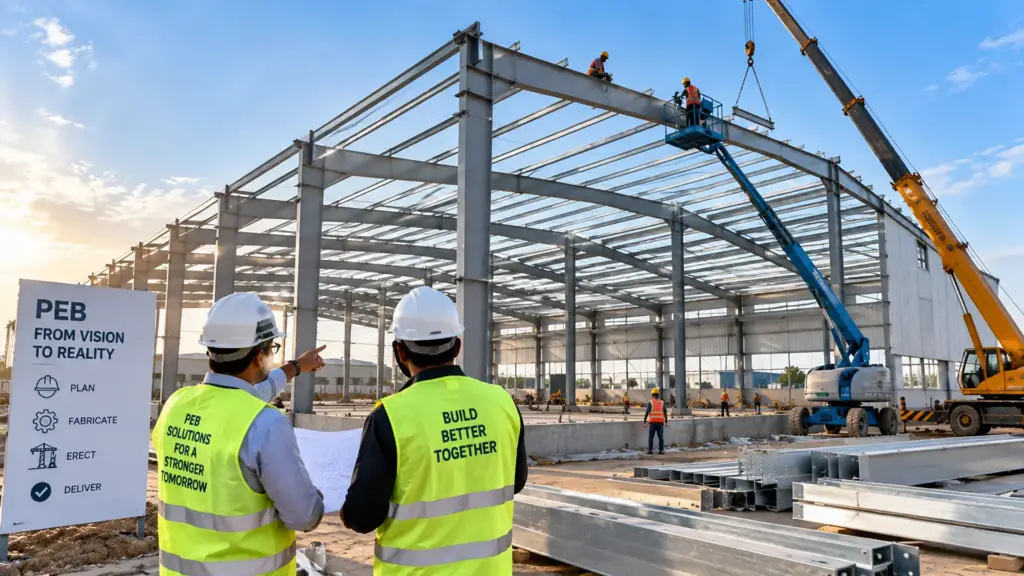
Every project starts with a site visit — this is where the team looks at ground conditions, access, and any nearby chemical exposure that should factor into the coating spec. From there, the design is finalized based on your load and span requirements, followed by fabrication at the unit and on-site erection. Throughout the process, compliance requirements (fire NOC, pollution board considerations) are factored into the design rather than addressed after construction — which is usually where delays happen on projects that skip this step. This is the kind of process-first approach worth expecting from any PEB manufacturer in Ankleshwar/Bharuch you’re evaluating.
Frequently Asked Questions
With the right coating grade — typically galvanized or galvalume steel — a PEB structure holds up well in this kind of environment. The key is specifying the correct coating thickness upfront rather than using a standard spec meant for drier regions.
Compliance depends on your specific plot, industry type, and local authority requirements, so this isn’t something a manufacturer can guarantee blanket-style. What a good manufacturer can do is design with these approvals in mind from the start, which makes the approval process smoother.
Load capacity is designed around your specific machinery and layout — it’s not a fixed number across all PEB structures. This is worked out during the design phase based on what you’ll actually be housing inside.
GIDC plots often come with specific building regulations depending on the zone and plot category. It’s worth checking your plot’s specific norms with GIDC or your architect before finalizing the design.
Roof slope, gutter placement, and drainage points are planned into the structure’s design to handle monsoon rainfall, which is a real factor in this region given the seasonal rainfall levels.
Get a Site-Specific Quote From a PEB Manufacturer in Ankleshwar/Bharuch
If you’re planning a new build or expansion in the Ankleshwar-Bharuch belt, the most useful next step is a site visit rather than a generic quote.
Reach out to discuss your specific requirements — span, load, industry type, and any compliance considerations — and get an estimate from a PEB manufacturer in Ankleshwar/Bharuch that actually reflects your site.