If you’re setting up or expanding an industrial unit in Rajkot, you already know the pressure. Land keeps getting pricier, timelines eat into your production schedule, and every month your shed isn’t standing is a month it isn’t earning you anything. Choosing the right PEB manufacturer in Rajkot matters more than most buyers realize, because the region’s foundries, auto component units, casting shops, ceramics manufacturers, and engineering goods makers all need buildings that go up quickly without cutting corners on strength.
This isn’t another “why steel is great” piece. It’s real costs, real specs, and the project considerations that actually matter when you’re choosing a PEB manufacturer in Rajkot. We manufacture out of Rajkot’s GIDC belt and have spent years working with local industries, so what follows is what we’ve actually seen work — and what hasn’t.
Why a PEB Manufacturer in Rajkot Needs to Understand This Belt, Not Just Build “A” Building
Rajkot isn’t a generic industrial city, and its buildings shouldn’t be designed like it is. The region runs on casting and foundry clusters, auto-ancillary manufacturing, ceramics, and engineering goods. That mix comes with specific demands: heavy floor loads for machinery and raw material storage, proper ventilation for foundries where heat and fumes need somewhere to go, and clear spans wide enough for crane bays to move material without obstruction.
Most of this demand sits in a handful of zones — Metoda GIDC, Shapar-Veraval, Gondal Road, Lodhika. Plot sizes here tend to run smaller than what you’d see in bigger industrial corridors, so making efficient use of every square foot matters even more. This is exactly why picking an experienced PEB manufacturer in Rajkot, rather than a generic vendor from outside the region, ends up mattering so much.
Then there’s the ground itself. Parts of Saurashtra sit on black cotton soil, which behaves very differently under load than firmer soil — it expands and contracts with moisture, and your foundation has to account for that movement. Add to that a cyclonic wind zone classification under IS 875, which directly shapes how the frame and foundation get engineered. Skip these considerations and you’re looking at cracks, uneven settling, or worse a few years down the line. We’ve seen it happen.
How this differs from Ahmedabad or Surat requirements: Rajkot’s industrial units are mostly smaller-footprint MSME sheds built for manufacturing and light assembly. Ahmedabad and Surat run on large-scale textile and logistics warehouses that need much bigger spans and taller clear heights. A PEB designed for a Surat warehouse won’t translate well to a Rajkot foundry — the load patterns, ventilation needs, and space use are different problems entirely.
What Is a Pre-Engineered Building (PEB)?
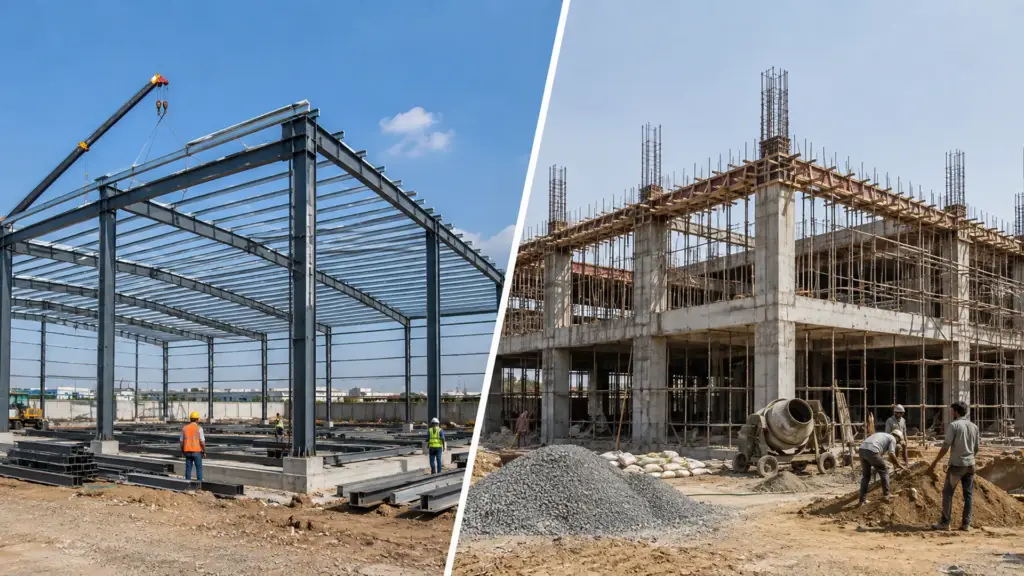
In simple terms, a PEB is a steel building where the columns, rafters, and framing are designed and fabricated in a factory, then shipped to site and bolted together. You’re not pouring concrete and waiting weeks for it to cure like conventional construction — you’re assembling pre-made, precision-cut steel parts on-site. Moving most of the work into a controlled factory is exactly why PEBs go up so much faster than traditional buildings.
PEB vs. Conventional RCC Construction
Here’s an honest comparison, including where RCC still wins.
| Factor | PEB (Steel) | Conventional RCC |
|---|---|---|
| Construction timeline | Weeks — components are pre-fabricated off-site | Months — on-site casting and curing |
| Cost per sq ft | Generally lower, especially for large clear-span sheds | Generally higher for large industrial spans |
| Structural flexibility | Easier to expand later; supports longer clear spans | Expansion is more complex, often needs structural rework |
| Durability & maintenance | Strong against structural cracking; needs periodic anti-corrosion upkeep | Very durable against fire and impact; lower ongoing maintenance in most cases |
| Best-fit use cases | Factories, warehouses, crane-bay units, quick-turnaround projects | Multi-storey buildings, high fire-resistance needs, projects where concrete’s mass helps |
Steel isn’t automatically the right call for every project. If you need multiple floors, extreme fire resistance, or minimal long-term maintenance regardless of upfront cost, RCC can still make more sense. But for most single-storey industrial sheds and factories in Rajkot’s manufacturing zones, working with the right PEB manufacturer in Rajkot usually wins on speed and cost without giving up the strength these units need.
The Real Cost of a PEB Shed in Rajkot — 2026 Breakdown
This is usually the first question everyone asks, and the one most manufacturers dodge.
As a rough starting point, PEB sheds around Rajkot typically run ₹[X]–₹[Y] per sq ft, all-in. That range is wide on purpose — nobody can give you an honest number without knowing your specs. A 15-meter span with plain color-coated roofing costs nothing like a crane-served structure with insulated panels and a mezzanine.
What actually moves the price:
- Span and eave height — wider spans and taller eaves mean heavier sections and more steel per square foot.
- Steel grade and tonnage — higher-grade steel (Grade E250 vs standard) costs more upfront but can reduce total tonnage, which sometimes evens out the difference.
- Roofing and cladding material — a basic color-coated sheet is far cheaper than insulated (PUF) panels, which add thermal and acoustic benefits but push up the per-sq-ft cost noticeably.
- Site preparation and foundation type — soil varies across GIDC zones, and foundation design changes with what’s underneath. You’ll usually need a soil test before anyone can price this accurately.
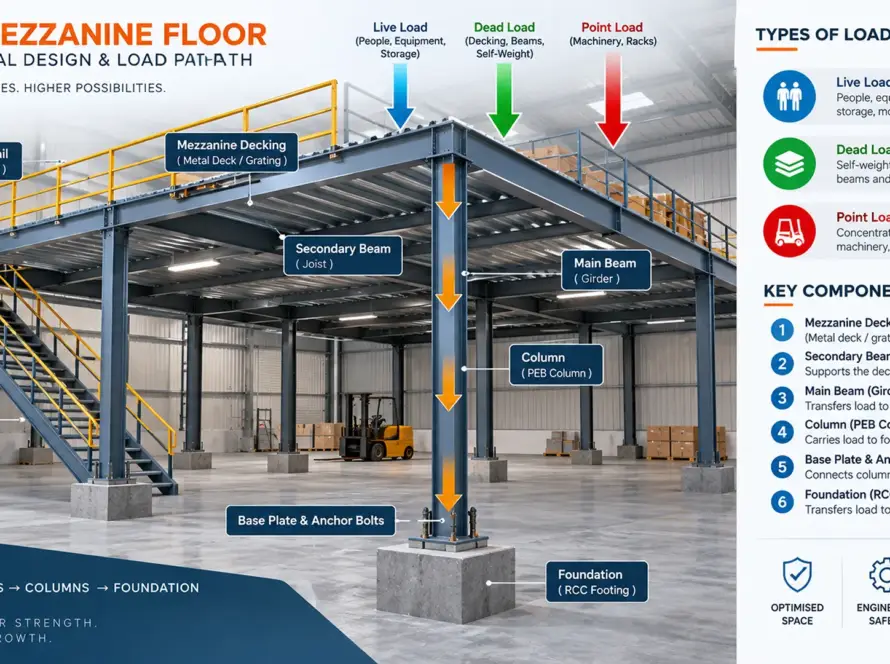
- Crane provision or mezzanine additions — any overhead crane or added floor level increases structural load and cost.
- Logistics — proximity to Metoda, Shapar-Veraval, or Lodhika affects transport cost for structural steel, and that’s a line item early estimates often miss.
With this many variables in play, the only number worth planning around comes from a site-specific quote from your PEB manufacturer in Rajkot, based on your load requirements, location, and building specs.
Technical & Engineering Standards We Follow
Generic promises don’t mean much to a plant engineer evaluating vendors. The codes and process behind the structure do.
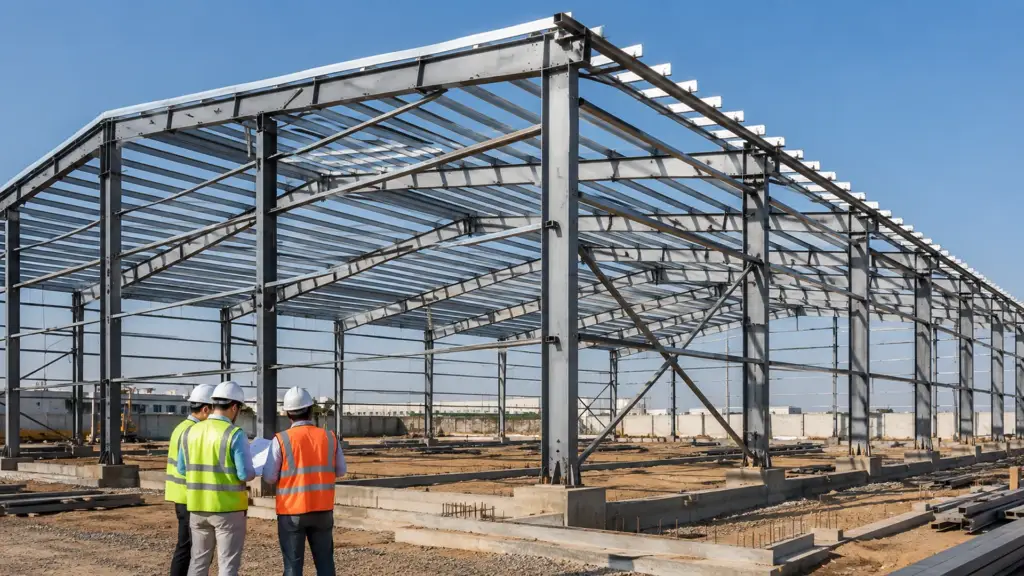
We use structural steel conforming to IS 2062 Grade B/E250, and grade selection depends on the load-bearing requirement of each project — heavier spans or crane bays usually call for higher-grade sections to keep deflection and fatigue within safe limits.
Design compliance follows IS 875 Part 3 for wind load, which matters given Rajkot’s seasonal wind exposure, and accounts for Seismic Zone III under Gujarat’s classification — this region has real earthquake risk, as past seismic activity in Kutch and Saurashtra has shown. General structural design follows IS 800.
On capacity, we deliver spans and bay widths suited to [state your actual range, e.g., “18m to 60m spans”] depending on the application — warehousing, manufacturing, or cold storage.
Fabrication is done [in-house / through outsourced partners — state which]. That distinction matters more than most buyers realize — it’s the difference between direct quality control over every weld and section, or relying on a third party’s standards and hoping they hold up. Before dispatch, every structure goes through material testing, weld inspection, and dimensional checks, so problems get caught before they reach site, not after.
Certifications, Safety & Warranty
Trust in this business comes down to paperwork and follow-through, not promises.
[If applicable] We hold ISO [9001:2015 or relevant] certification, which verifies our manufacturing process follows a consistent, documented quality system — not a one-time inspection that gets forgotten.
During erection, our teams follow standard site safety protocols — harnesses, barricading, trained supervision for at-height work. PEB erection carries real risk if it’s rushed, and we don’t rush it.
Our structural warranty covers [state period, e.g., “10 years on primary structural members”], covering manufacturing and design defects. It excludes damage from natural disasters, unauthorized modifications, or lack of routine maintenance, and that’s worth checking in the fine print of any vendor’s terms, ours included.
For after-sales, we offer [maintenance support / AMC options if offered] so the structure holds up well past handover.
Recent PEB Projects in Rajkot
Talk is cheap here. Specifics aren’t.
[Project Type 1] — e.g., Auto-Ancillary Warehouse, Metoda GIDC [Client name if shareable, else “an auto-ancillary manufacturer”] — roughly [X] sq ft, about [Y] tonnes of steel, completed in [Z] weeks from order to handover. The tricky part was fitting a crane bay into the existing layout without stopping the client’s production. We phased erection around their working shifts to solve it.
[Project Type 2] — e.g., Casting Unit Shed, Shapar-Veraval [Client name if shareable] — approximately [X] sq ft, [Y] tonnes, delivered in [Z] weeks. Soil conditions here were the usual Shapar-Veraval challenge, which meant revising the foundation design after testing — done without pushing the timeline back.
[Project Type 3] — e.g., Cold Storage / Ceramics Unit [Client name if shareable] — around [X] sq ft, [Y] tonnes, completed in [Z] weeks. This one needed insulated cladding for temperature control, which changed both the material spec and the erection sequence from a standard shed.
(Real project names and client details, where permission allows, always land better than anonymized figures — worth pulling from your marketing or sales team before this goes live.)
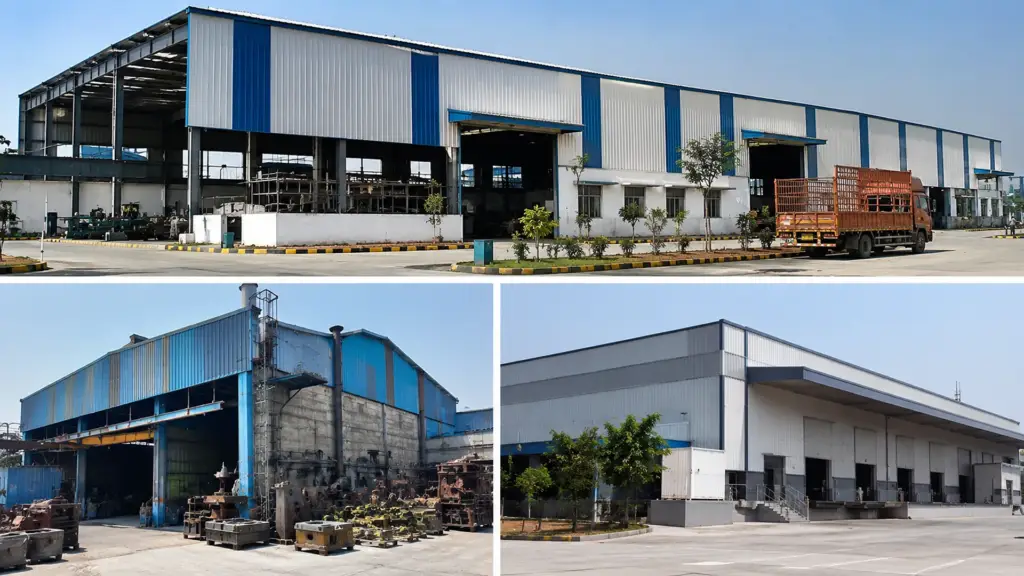
How to Choose the Right PEB Manufacturer in Rajkot
A few questions will tell you more than any brochure:
- Ask whether manufacturing is in-house or outsourced, and request a plant visit. A real fabrication facility isn’t hard to verify in person.
- Ask about current plant capacity and lead time. A vendor stretched thin on other orders will delay yours too.
- Request IS code compliance documentation for your specific design — wind load, seismic, and structural calculations, not a generic claim.
- Get post-installation support and warranty terms in writing, including what’s excluded.
- Ask to see 2–3 completed projects, in person if possible, so you’re judging finished work instead of renderings.
Frequently Asked Questions
Depends on size and complexity, but most standard sheds finish within [X–Y weeks] from finalized design to handover, not counting approval delays.
[State minimum, e.g., “We typically take on projects starting from X sq ft”]. Smaller custom requirements can still be discussed directly.
Yes. PEB systems are built for future expansion — adding a mezzanine or extending the span later is usually possible if it’s planned for at the design stage.
Routine checks on roof sheeting, gutters, and bolted connections, plus periodic repainting of exposed steel, keep it in good shape for decades.
[State yes/no and scope]. Liaisoning support for GIDC approvals can save real time if it’s handled alongside construction planning.
Ready to Get an Accurate Quote?
No vague pricing, no copy-paste specs — just engineering that holds up and project numbers you can check. As a PEB manufacturer in Rajkot, we build quotes around your actual site, not a generic template. Share your site details and load requirements, and we’ll put together a quote built around your project.