A pre-engineered building (PEB) is designed for strength, efficiency, and long service life, but that doesn’t mean it can be left without regular care. Small issues such as loose fasteners, roof leaks, blocked gutters, damaged sealants, or early signs of corrosion can gradually turn into costly repairs if they are ignored. In industrial facilities, poor maintenance may also lead to unplanned downtime, safety concerns, and damage to equipment or stored materials.
The good news is that most of these problems can be identified and addressed through routine inspections and preventive maintenance. That’s where this guide comes in. Instead of offering general advice, it provides a practical PEB building maintenance checklist that you can actually use. You’ll also learn how maintenance requirements vary by environment, what typical maintenance costs to expect, which compliance points to consider, and how to keep clear inspection records with a simple maintenance log template. This practical approach helps building owners protect their investment and extend the life of their PEB.
Understanding What Needs Maintenance in a PEB
A pre-engineered building (PEB) is designed for strength, durability, and long-term performance, but like any industrial structure, it still requires regular maintenance. Routine inspections help identify small issues before they become costly repairs or lead to operational downtime. They also support workplace safety and help the building continue performing as intended.
Many maintenance tasks are straightforward and can be included in a planned facility maintenance schedule. Others, such as checking structural connections or assessing corrosion, may require experienced maintenance personnel or qualified inspectors.
The goal of PEB maintenance is not to replace major components frequently but to keep every part of the building in good condition. Regular checks also help extend the service life of roofing, cladding, drainage systems, and structural members while reducing the risk of water leaks, corrosion, or loose connections.
Understanding the main parts that require attention makes it easier to follow a structured maintenance checklist and prioritize inspections throughout the year.
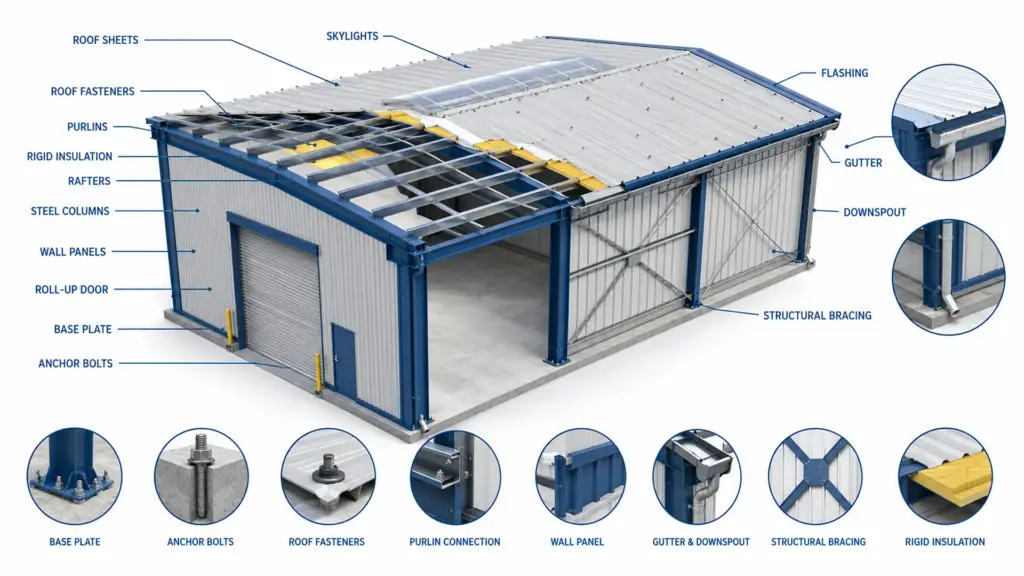
Key Components That Require Regular Attention
- Roofing system – Inspect roof sheets, flashing, ridge caps, roof fasteners, and sealants for leaks, damage, or loose fittings.
- Primary steel frame – Check columns, rafters, and other main structural members for corrosion, deformation, cracks, or coating damage.
- Secondary steel members – Inspect purlins, girts, bracing, and support members for alignment, corrosion, or loose connections.
- Gutters and downspouts – Remove leaves, dirt, and debris to ensure proper rainwater drainage and prevent water overflow.
- Base plates and anchor bolts – Look for signs of rust, movement, loose anchor bolts, or foundation-related issues.
- Doors, windows, and skylights – Ensure smooth operation, proper sealing, and check for damaged frames, broken panels, or water leaks.
- Insulation system – Inspect insulation for moisture, damage, sagging, or reduced effectiveness caused by water intrusion.
- Fasteners and welds – Check bolts, screws, rivets, and visible welds for looseness, corrosion, wear, or signs of structural stress.
The Complete PEB Maintenance Checklist (By Frequency)
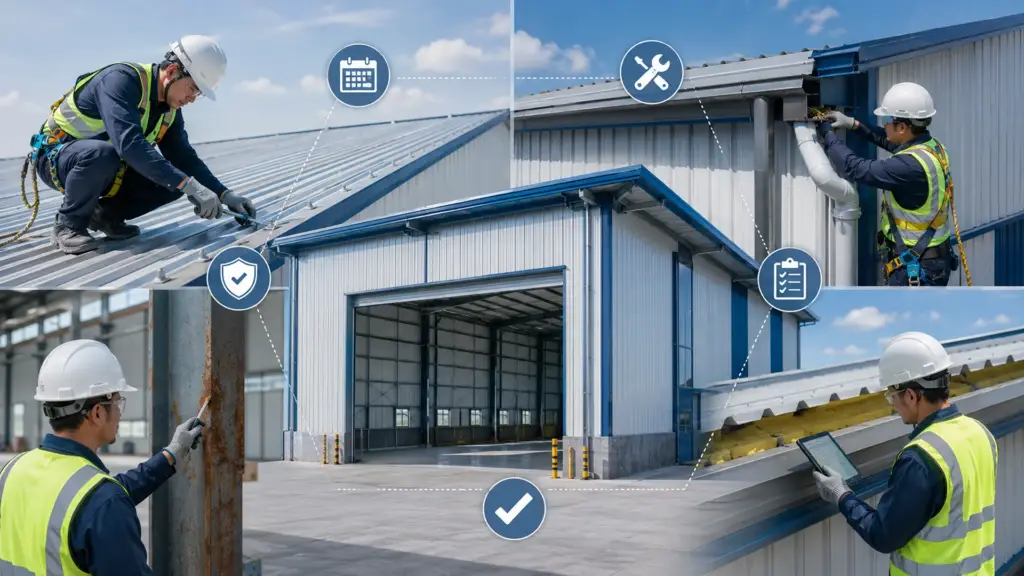
A planned maintenance schedule helps keep a pre-engineered building safe, efficient, and in good working condition. The checklist below groups essential maintenance tasks by frequency so they are easier to manage and document. Update the Status column during every inspection to maintain a clear maintenance record.
Daily & Weekly Checks
| Task | Area | Responsible Party | Status |
|---|---|---|---|
| Walk around the building and look for visible damage, leaks, or unusual movement | Exterior & Interior | Maintenance Staff | ☐ Pending / ☐ Completed |
| Check that all doors, shutters, and windows open and close smoothly | Doors & Openings | Maintenance Staff | ☐ Pending / ☐ Completed |
| Ensure roof drains and surface drainage paths allow water to flow freely | Drainage System | Maintenance Staff | ☐ Pending / ☐ Completed |
| Inspect for water accumulation after rainfall | Roof & Surroundings | Maintenance Staff | ☐ Pending / ☐ Completed |
| Report any unusual noises, vibrations, or safety hazards immediately | Entire Building | Facility Supervisor | ☐ Pending / ☐ Completed |
Monthly Checks
| Task | Area | Responsible Party | Status |
|---|---|---|---|
| Inspect accessible bolts, nuts, and fasteners for signs of loosening or damage | Structural Connections | Maintenance Team | ☐ Pending / ☐ Completed |
| Remove leaves, dirt, and debris from gutters and downpipes | Roof Drainage | Maintenance Team | ☐ Pending / ☐ Completed |
| Check steel surfaces for minor rust or paint damage | Structural Steel | Maintenance Team | ☐ Pending / ☐ Completed |
| Inspect sealants around roof joints, wall panels, doors, and windows | Building Envelope | Maintenance Team | ☐ Pending / ☐ Completed |
| Look for damaged wall cladding, dents, or loose panels | Exterior Walls | Maintenance Team | ☐ Pending / ☐ Completed |
| Verify that ventilation openings remain clear and unobstructed | Ventilation System | Maintenance Team | ☐ Pending / ☐ Completed |
Quarterly Checks
| Task | Area | Responsible Party | Status |
|---|---|---|---|
| Inspect roof sheets for corrosion, loose fasteners, or physical damage | Roofing System | Maintenance Engineer | ☐ Pending / ☐ Completed |
| Examine flashings around roof edges, skylights, and wall intersections | Roof Flashings | Maintenance Engineer | ☐ Pending / ☐ Completed |
| Inspect structural joints for signs of movement or wear | Structural Frame | Structural Engineer / Maintenance Engineer | ☐ Pending / ☐ Completed |
| Check insulation for moisture, damage, or displacement where accessible | Roof & Wall Insulation | Maintenance Engineer | ☐ Pending / ☐ Completed |
| Inspect HVAC supports and roof-mounted equipment for secure installation | HVAC Equipment | HVAC Technician | ☐ Pending / ☐ Completed |
| Review expansion joints and weather seals for deterioration | Expansion Joints | Maintenance Engineer | ☐ Pending / ☐ Completed |
Annual / Pre-Season Checks
| Task | Area | Responsible Party | Status |
|---|---|---|---|
| Conduct a comprehensive structural inspection | Entire Building | Qualified Structural Engineer | ☐ Pending / ☐ Completed |
| Check foundation condition and inspect accessible anchor bolts | Foundation & Base Connections | Structural Engineer | ☐ Pending / ☐ Completed |
| Assess protective coatings and identify areas that may require repainting | Steel Structure | Maintenance Engineer | ☐ Pending / ☐ Completed |
| Inspect lightning protection and grounding system, where installed | Electrical Protection System | Licensed Electrician | ☐ Pending / ☐ Completed |
| Review emergency response procedures and update maintenance records | Facility Management | Facility Manager | ☐ Pending / ☐ Completed |
| Schedule repairs for issues identified during inspections before the next season | Entire Building | Facility Manager | ☐ Pending / ☐ Completed |
PEB Maintenance Requirements by Environment (Not Just Monsoon)
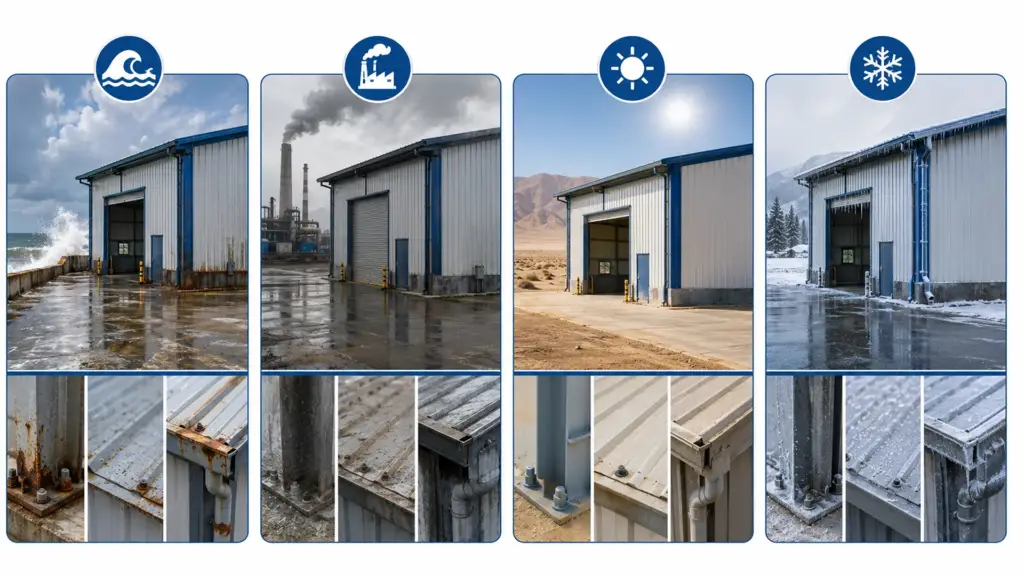
Many people associate PEB maintenance with the monsoon season, but weather is only one part of the picture. The environment surrounding a pre-engineered building has a major impact on how quickly different components wear over time. Factors such as salt in the air, industrial pollution, dust, extreme heat, or condensation can all affect the building’s steel structure, roof, wall panels, and protective coatings. Adjusting your inspection schedule to local conditions helps detect problems early and supports the long-term performance of the building.
Coastal & High-Humidity Zones
Buildings located near the sea or in areas with consistently high humidity are more vulnerable to corrosion. Salt-laden air can gradually attack exposed steel and damage protective coatings if not addressed. Regular inspections should focus on signs of rust, coating damage, fasteners, and joints where moisture may collect. A visual inspection every 3 months is generally recommended for these environments.
Industrial & High-Pollution Areas
Industrial facilities may be exposed to chemical fumes, dust, and airborne pollutants that can accelerate coating deterioration and surface corrosion. Maintenance should include cleaning affected areas and checking the condition of painted surfaces, roof sheets, and structural connections. An inspection every 3–4 months helps identify issues before they become more serious.
Hot/Dusty & Desert Climates
High temperatures, intense sunlight, and airborne dust can affect both exterior finishes and building systems. Prolonged UV exposure may reduce coating performance, while dust can accumulate around roof vents, gutters, and HVAC equipment. Inspecting and cleaning these areas every 4–6 months helps maintain proper ventilation and drainage.
Cold & Condensation-Prone Regions
In colder climates, condensation inside the building can become a concern, especially if insulation or ventilation is not performing as intended. Excess internal moisture may contribute to corrosion on hidden steel surfaces and reduce insulation effectiveness. Checking insulation, roof panels, and areas where moisture can collect every 6 months is a practical maintenance approach.
| Environment | Primary Risk | Inspection Frequency |
|---|---|---|
| Coastal & High-Humidity Zones | Salt exposure and corrosion | Every 3 months |
| Industrial & High-Pollution Areas | Chemical residue and coating breakdown | Every 3–4 months |
| Hot/Dusty & Desert Climates | UV damage and dust accumulation | Every 4–6 months |
| Cold & Condensation-Prone Regions | Internal moisture and insulation issues | Every 6 months |
What Happens If You Skip PEB Maintenance (Real Cost Impact)
Skipping routine maintenance on a pre-engineered building (PEB) may seem like a way to save money, but small issues often become much more expensive when left untreated. Regular inspections help identify problems early, reducing the risk of major repairs, operational disruption, and safety concerns.
The examples below are illustrative cost ranges only. Actual costs depend on the building size, location, material prices, and the extent of the damage.
| Maintenance Issue | Indicative Example Cost |
|---|---|
| Minor rust treatment and repainting of affected steel members | ₹10,000–₹75,000 |
| Replacement of severely corroded structural steel sections or major frame repairs | ₹5 lakh–₹50 lakh+ |
| Repairing a small roof leak | ₹5,000–₹50,000 |
| Roof leak causing damaged stored goods or production downtime | Can exceed repair costs significantly, depending on inventory value and business interruption |
A roof leak, for example, is not always just a roofing problem. In a warehouse, water can damage stored inventory, electrical systems, insulation, or sensitive equipment. If production must stop while repairs are completed, the resulting downtime can cost far more than the repair itself.
Another overlooked risk is insurance. Many insurers expect building owners to take reasonable steps to maintain their property. If maintenance records are missing or there is evidence that damage resulted from long-term neglect, claim investigations may become more complicated, and coverage decisions could be affected depending on the policy terms.
Maintenance Compliance: Standards, Safety & Sign-Offs
Proper maintenance is not only about extending the life of a pre-engineered building (PEB). It is also essential for meeting safety, compliance, insurance, and warranty requirements. Keeping clear maintenance records and following recognized engineering standards helps demonstrate that the building has been maintained responsibly.
Structural Safety Audits & Applicable Standards
A routine visual inspection can identify common maintenance issues, but certain situations require a qualified structural engineer to inspect the building and provide a formal sign-off. This is especially important after events such as earthquakes, severe storms, accidental impacts, fire damage, major modifications, or when new equipment increases structural loads.
In India, structural steel buildings are generally designed according to IS 800:2007 (General Construction in Steel), while loading considerations refer to the IS 875 series and seismic design requirements refer to IS 1893. Always confirm that the latest applicable editions and amendments are being followed for your project before making engineering decisions. (Bureau of Indian Standards)
Safety Protocols During Maintenance Work
Maintenance should always be carried out using safe work practices. At a minimum:
- Wear appropriate PPE, including helmets, safety shoes, gloves, and fall-protection equipment where required.
- Ensure overhead cranes and other moving equipment are isolated or demobilized before servicing begins.
- Use approved walkways or fall-protection systems when accessing roof areas.
- Never step directly onto skylights, as they are not designed to support a person’s weight.
These basic precautions help reduce the risk of accidents during routine maintenance.
Insurance & Warranty Implications
Many PEB manufacturers provide warranties that depend on proper maintenance and documented inspections. If repairs, roof replacements, or structural alterations are carried out without records or approved procedures, warranty claims may be rejected.
Similarly, insurers often request maintenance logs, inspection reports, and evidence that recommended repairs were completed before processing claims related to structural damage. Maintaining an organized service history can therefore protect both your warranty coverage and your insurance interests.
In-House Team vs. Annual Maintenance Contract (AMC): Which Is Right for You?
Choosing between an in-house maintenance team and an Annual Maintenance Contract (AMC) depends on your facility, equipment, and compliance requirements. Both options can work well, but the right choice depends on the level of risk, available expertise, and the need for documented maintenance records.
When In-House Maintenance Makes Sense
An in-house maintenance team is often suitable for smaller facilities where equipment is limited and operating conditions are relatively low risk. This approach works best when trained technicians are already part of the workforce and can perform routine inspections, lubrication, cleaning, and minor repairs according to the manufacturer’s recommendations.
In-house maintenance may be a practical choice if:
- Your facility has a small number of machines.
- Maintenance staff are properly trained.
- Equipment downtime can be managed internally.
- Routine maintenance does not require specialized testing.
When to Choose an AMC
An Annual Maintenance Contract is generally a better option for larger facilities, manufacturing plants, warehouses, and other industrial sites where equipment reliability and compliance are critical. An AMC provides scheduled servicing, preventive maintenance, and professional documentation that can support regulatory inspections and internal audits.
An AMC is especially valuable when:
- Your site operates critical or high-risk equipment.
- You need regular maintenance records for compliance.
- Specialized tools or technical expertise are required.
- Reducing unexpected breakdowns is a business priority.
What to Look for in an AMC Vendor
Before signing an AMC, evaluate the service provider carefully. A reliable vendor should offer:
- Clearly defined response times.
- Certified and experienced inspectors or technicians.
- Detailed maintenance reports and service documentation.
- A clear scope of work covering inspections, preventive maintenance, and repairs.
- Transparent contract terms, including exclusions and emergency support.
| Factor | In-House Team | Annual Maintenance Contract (AMC) |
|---|---|---|
| Best for | Small, low-risk facilities | Large or industrial operations |
| Expertise | Internal staff | Certified service professionals |
| Documentation | Depends on internal processes | Regular, structured maintenance records |
| Compliance Support | Limited unless managed carefully | Strong support through documented servicing |
| Cost Structure | Ongoing staffing costs | Contract-based service fees |
Maintenance Log Template: Track Every Inspection
A maintenance log helps you keep a clear record of every inspection and repair carried out on your pre-engineered building. Instead of relying on memory, you have a documented history that makes it easier to spot recurring issues, plan preventive maintenance, and demonstrate proper upkeep when required.
Your maintenance log should include:
- Inspection date
- Area or component inspected
- Maintenance task performed
- Inspector or technician name
- Findings or observations
- Repairs completed
- Recommended corrective actions
- Next scheduled inspection date
You can maintain this information in a simple spreadsheet or printed checklist. For convenience, you may also use a downloadable PDF or Excel maintenance log template that can be updated after each inspection and shared with your maintenance team.
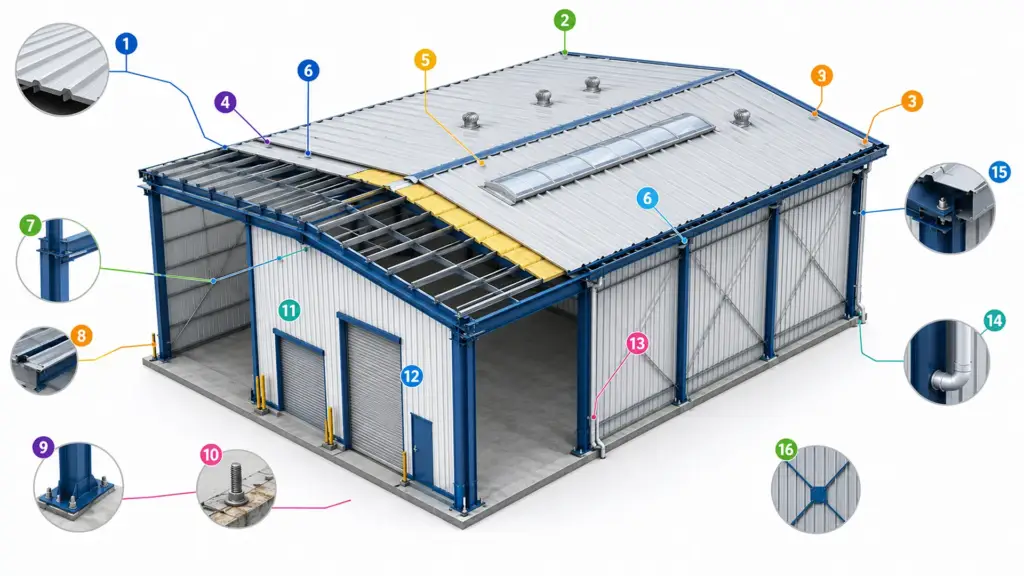
Visual Guide — Where Maintenance Happens on a PEB
The illustration below highlights the main areas that require routine inspection in a pre-engineered building. It provides a quick visual reference to help maintenance teams identify critical components and connect them with the inspection checklist covered earlier in this guide.
The diagram should clearly label:
- Eave gutter
- Valley gutter
- Purlins
- Base plate
- Flashing
- Skylight
- Roll-up door
Each labeled component should correspond to its relevant maintenance section, making it easier to perform systematic inspections and reduce the risk of missed maintenance points.
Frequently Asked Questions
1. How often should a PEB be inspected?
A pre-engineered building should have a general visual inspection at least once a year. Additional inspections are recommended after severe weather, heavy storms, earthquakes, or if you notice visible damage.
2. What is the average lifespan of a well-maintained PEB?
A well-designed and properly maintained PEB can remain structurally reliable for several decades. Regular inspections, timely repairs, and protective coatings help maximize its service life.
3. Is PEB maintenance cheaper than traditional building maintenance?
In many cases, yes. Because PEB components are factory-engineered and use standardized steel members, maintenance is often simpler and more predictable than many conventional building systems.
4. Do I need a structural engineer for routine PEB maintenance?
Routine cleaning and basic visual checks can usually be handled by trained maintenance staff. However, if you find structural damage, excessive corrosion, unusual movement, or connection issues, a qualified structural engineer should assess the building.
5. What’s the first sign a PEB needs urgent repair?
Common warning signs include roof leaks, visible rust, loose bolts, bent steel members, cracked foundation areas, or doors and windows that suddenly become difficult to operate. These issues should be inspected promptly to prevent further damage.
Conclusion — Build a Maintenance Habit, Not a Monsoon Panic
A pre-engineered building performs best when maintenance is planned instead of delayed until problems appear. Regular inspections, simple preventive care, and quick repairs can help extend the building’s lifespan, improve safety, and reduce long-term costs. Start with a practical maintenance checklist or schedule a professional PEB inspection to identify potential issues early and keep your building operating efficiently throughout the year.