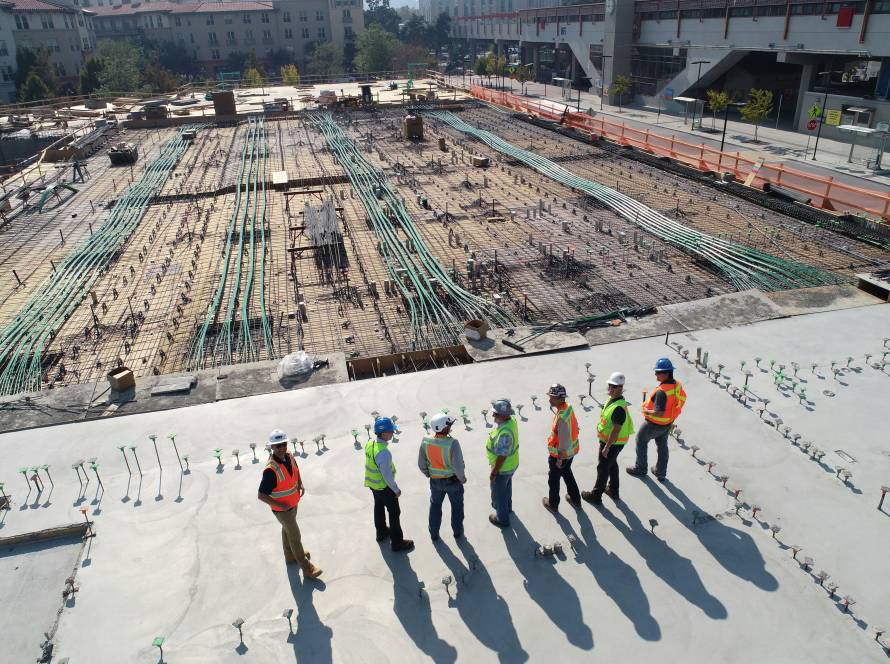
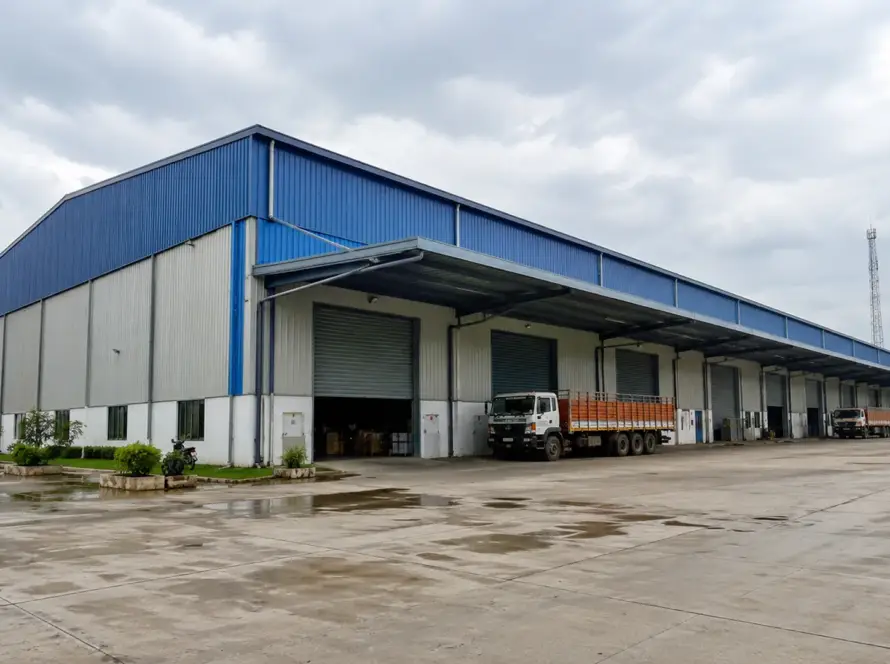
Pre-Engineered Buildings (PEBs) have become one of the most popular construction solutions for industrial, commercial, warehouse, logistics, and manufacturing projects. Their faster construction time, cost-effectiveness, and structural reliability make them a preferred choice over traditional building methods.
As more businesses look for efficient ways to expand their facilities, the demand for PEB structures continues to grow across various industries. However, before starting a project, it is important to understand the complete construction process to ensure proper planning, budgeting, and execution.
In this guide, we will explain the Complete PEB Construction Process Step by Step, covering every stage from initial design and engineering to fabrication, site erection, quality inspections, and final project handover.
What Is a Pre-Engineered Building (PEB)?
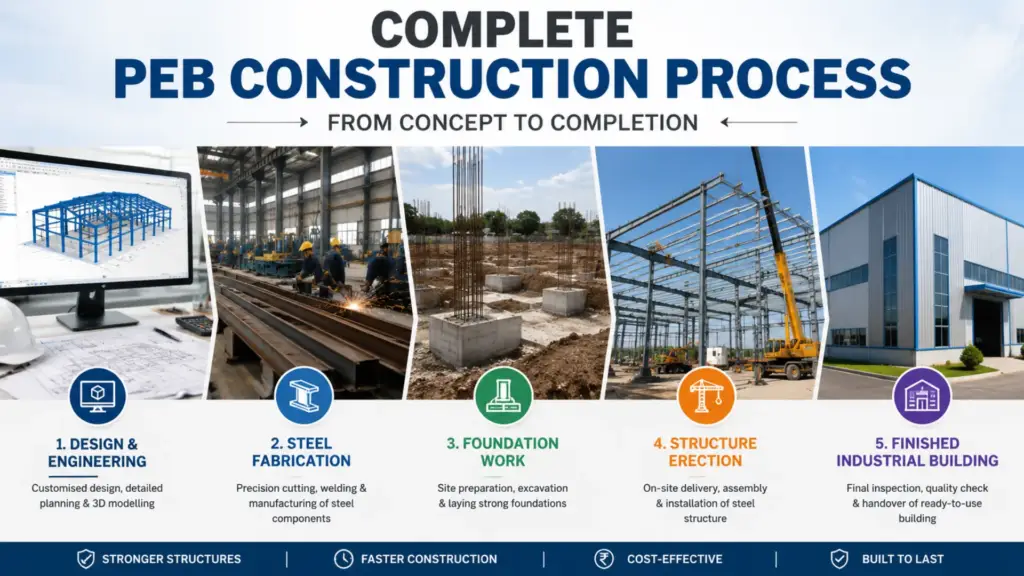
A Pre-Engineered Building (PEB) is a steel structure that is designed, engineered, and manufactured in a factory before being transported to the construction site for installation. The building components are produced according to project requirements, which helps reduce construction time and material waste.
The main components of a PEB structure include primary steel frames, secondary members such as purlins and girts, roof and wall cladding, and connection accessories. These parts are fabricated in advance and assembled on-site.
PEB buildings are widely used for warehouses, factories, industrial sheds, logistics centers, commercial facilities, and storage units. Their growing popularity comes from their flexibility, durability, and cost efficiency.
Compared to conventional construction, PEB construction is much faster because most of the fabrication work is completed off-site. This allows quicker installation, better quality control, and faster project completion.
Step 1 – Project Planning and Site Assessment
A successful PEB project starts with proper planning and a detailed site assessment. This stage helps ensure that the building is designed according to operational needs, site conditions, and future business growth plans.
Understanding Project Requirements
Before the design process begins, it is important to clearly define the purpose of the building. Whether it is a warehouse, factory, logistics center, showroom, or industrial facility, the intended use directly affects the structural design and layout.
The project team also determines the required building size, internal layout, clear span requirements, and space for equipment, storage, or production activities. At this stage, future expansion plans are carefully considered. Designing a PEB with expansion in mind allows additional bays or sections to be added later without major structural modifications, saving both time and cost.
Site Survey and Soil Investigation
Once the project requirements are finalized, a detailed site survey is conducted. This includes assessing the land dimensions, topography, accessibility, drainage conditions, and nearby infrastructure.
Soil testing is another critical step in the PEB construction process. Engineers analyze the soil’s load-bearing capacity to design a safe and stable foundation. During the survey, potential challenges such as uneven terrain, waterlogging issues, underground utilities, or environmental constraints are identified early, helping prevent costly delays during construction.
Step 2 – PEB Design and Engineering
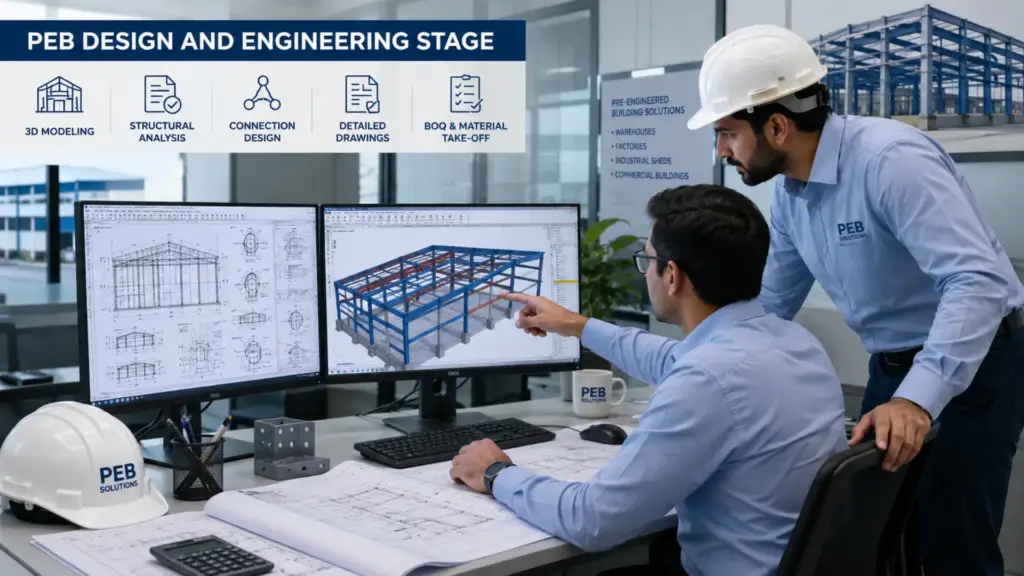
Once the project requirements are finalized, the next stage is PEB design and engineering. This is one of the most important steps in the complete PEB construction process because it ensures the building is safe, durable, and cost-efficient.
Structural Design Process
The engineering team starts by performing detailed load calculations. These calculations include dead loads, live loads, equipment loads, and other forces that may affect the structure. Wind and seismic considerations are also carefully analyzed based on the project location. This helps the building withstand strong winds, earthquakes, and other environmental conditions while meeting local building codes and safety standards.
Detailed Engineering Drawings
After the structural design is approved, engineers prepare detailed drawings for fabrication and construction. General Arrangement (GA) drawings show the overall building layout, dimensions, and structural components. Shop drawings provide precise fabrication details for each steel member. At the same time, material planning is completed to ensure the correct quantity of steel, roofing sheets, fasteners, and accessories are available before manufacturing begins.
Step 3 – Steel Fabrication and Manufacturing
After the design is approved, the steel fabrication process begins in a controlled manufacturing facility. This stage is important because every component must be produced according to the approved drawings and specifications.
Fabrication Activities
The fabrication process includes several key activities:
- Cutting: Steel sections are cut into the required sizes using advanced cutting machines.
- Welding: Different steel parts are welded together to create structural members.
- Drilling: Holes are drilled accurately for bolts and connections.
- Assembly: Individual components are assembled and prepared for shipment.
Quality Control Checks
Strict quality checks are carried out throughout the manufacturing process. These include dimensional inspections to ensure accuracy, material quality verification to confirm compliance with standards, and surface treatment procedures such as cleaning, priming, and painting. These checks help improve durability, corrosion resistance, and overall structural performance.
Step 4 – Foundation Construction and Site Preparation
While steel components are being manufactured, work at the project site begins simultaneously. Proper site preparation ensures smooth installation and long-term structural stability.
Foundation Work
The foundation process typically includes:
- Excavation: Digging according to the approved foundation layout.
- Concrete Footing Construction: Creating strong concrete bases to support the structure.
- Anchor Bolt Placement: Installing anchor bolts precisely to connect the steel columns with the foundation.
Site Readiness
The construction site is prepared by leveling the ground and ensuring proper access for equipment and vehicles. Utility planning for electricity, water, and drainage is also completed. In addition, designated storage areas are arranged for incoming materials, helping maintain site organization and preventing damage to PEB components.
Step 5 – Transportation and Delivery of PEB Components
Once fabrication is completed, all PEB components are carefully packed and prepared for transportation. Each member is labeled properly to simplify identification during installation.
Safe loading and transportation procedures are followed to prevent damage during transit. Continuous coordination between the manufacturing facility and the project site ensures smooth logistics planning. Timely delivery of materials is essential because it helps avoid project delays and allows erection activities to begin as scheduled.
Step 6 – Steel Structure Erection Process
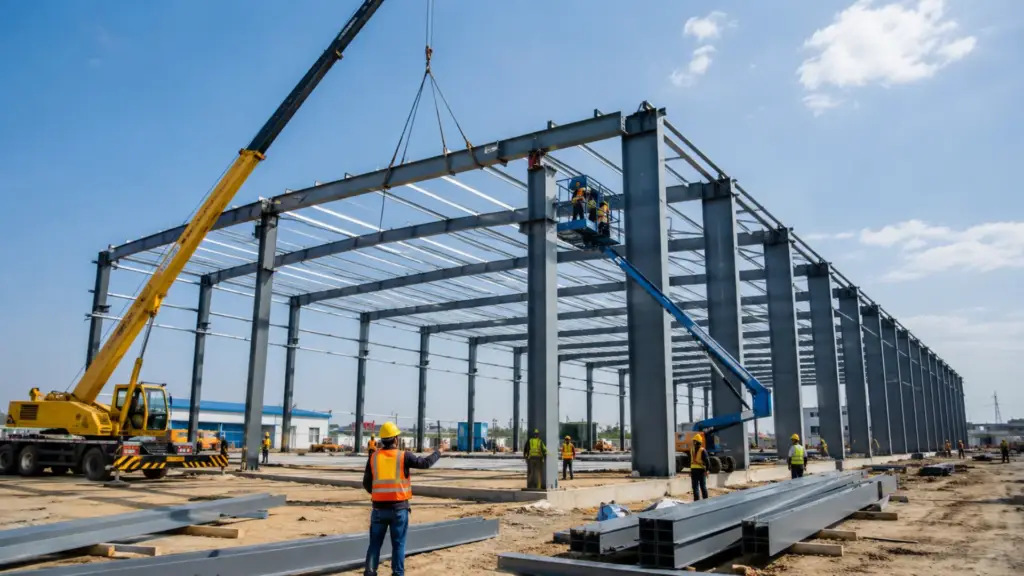
The steel structure erection stage is where the building starts taking shape on-site. Experienced erection teams follow detailed installation plans to ensure accuracy and safety.
Primary Structure Installation
The first step involves installing the main structural elements:
- Columns: Steel columns are positioned and secured to the foundation anchor bolts.
- Rafters: Rafters are installed between columns to create the primary framework of the building.
Secondary Structure Installation
After the primary frame is completed, secondary members are installed, including:
- Purlins to support roof sheets.
- Girts to support wall cladding.
- Bracing Systems to improve structural stability and resistance against wind loads.
Safety Measures During Erection
Safety remains a top priority throughout the erection process. Certified crane operators handle lifting activities, while workers use personal protective equipment such as helmets, safety belts, gloves, and harnesses. Regular safety inspections help reduce risks and ensure smooth project execution.
Step 7 – Roof and Wall Cladding Installation
After the steel framework is completed, roof and wall cladding systems are installed to enclose the structure and provide protection from external weather conditions.
Roofing System Installation
Roof sheets are fixed onto the purlins using approved fastening systems. Depending on project requirements, insulation materials may also be installed to improve thermal efficiency, reduce heat transfer, and enhance indoor comfort.
Wall Cladding Work
Wall panels are attached to the girts to create the building envelope. Modern cladding systems provide excellent weather resistance, helping protect the structure from rain, wind, dust, and other environmental factors while improving the building’s appearance.
Step 8 – Finishing Work and Final Inspection
The final stage of the complete PEB construction process focuses on finishing activities and comprehensive quality inspections before project handover.
Building Accessories Installation
Various accessories are installed to complete the building, including:
- Doors
- Windows
- Ventilators
- Skylights
These elements improve functionality, ventilation, natural lighting, and accessibility.
Quality Inspection and Testing
A detailed final inspection is conducted to verify structural integrity and construction quality. Engineers perform structural checks, alignment verification, and connection inspections. Safety compliance reviews are also carried out to ensure the building meets project specifications and applicable standards before it is officially handed over to the client.
Typical Timeline for a PEB Construction Project
The timeline of a PEB construction project depends on the size, complexity, and site conditions, but most projects follow a structured schedule. The design phase usually takes 1–3 weeks, where engineers finalize drawings and specifications. The fabrication phase follows, typically requiring 3–6 weeks to manufacture steel components.
At the same time, foundation work begins on-site and may take 2–4 weeks depending on soil conditions. Once materials arrive, the erection and finishing stages generally take 2–8 weeks. Factors such as project size, weather conditions, material availability, and approval delays can affect the overall project duration.
Benefits of Following a Proper PEB Construction Process
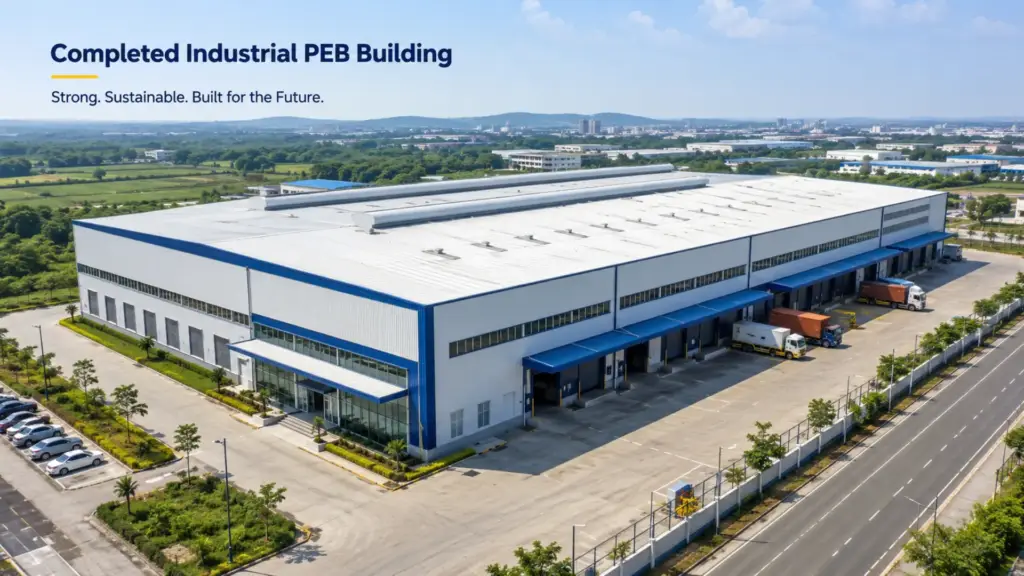
A well-planned PEB construction process offers several advantages. It helps achieve faster project completion by reducing delays and ensuring smooth coordination between design, fabrication, and installation teams. Proper planning also improves quality control, as every component is manufactured and inspected according to standards.
This leads to better cost efficiency by minimizing material wastage and rework. In addition, following the correct process enhances workplace safety during construction. Since the structure is accurately designed and assembled, it also requires less maintenance over time, resulting in lower long-term operating costs.
Conclusion
Understanding the complete PEB construction process is essential for anyone planning an industrial, commercial, warehouse, or infrastructure project. From design and engineering to fabrication, foundation preparation, erection, and final inspection, every stage plays an important role in delivering a strong and reliable structure.
Working with an experienced PEB manufacturer ensures better quality, timely project completion, and long-term performance. Whether you are building a factory, warehouse, or commercial facility, choosing the right partner can make the entire process smoother and more cost-effective. Contact our team today for expert consultation, project planning support, and a customized quotation for your PEB project.