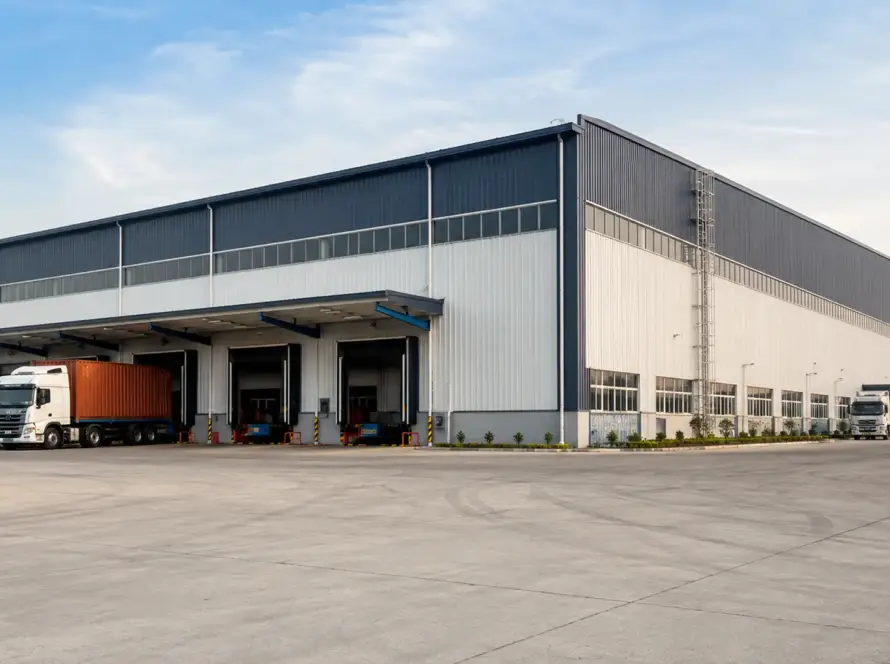
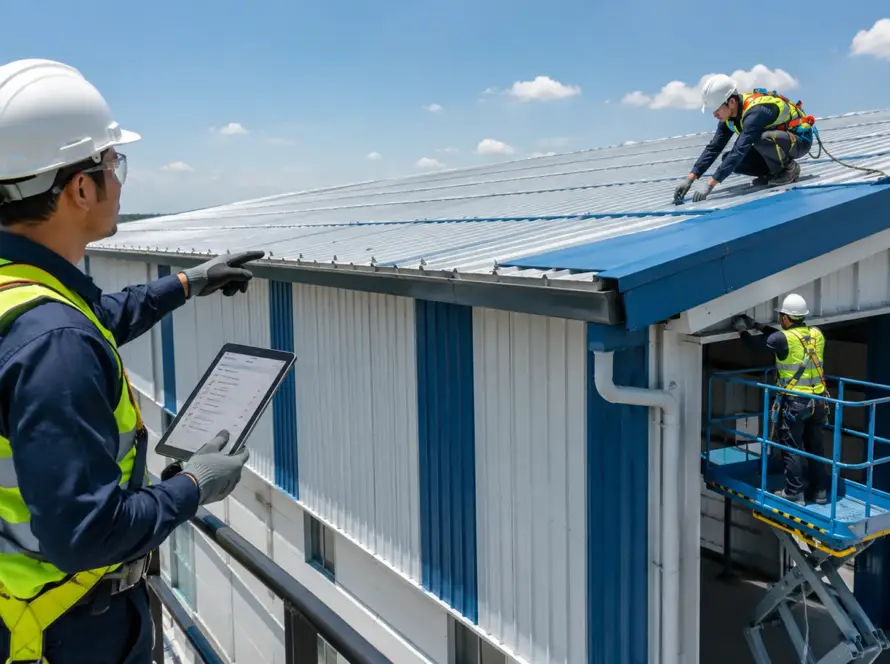
Pre-Engineered Buildings (PEBs) have become one of the most popular construction solutions for industrial facilities, warehouses, factories, logistics centers, and commercial buildings. Their faster construction time, cost efficiency, and design flexibility make them a preferred choice for many businesses and developers.
However, the success of a PEB project depends heavily on proper planning, quality materials, and correct construction practices. Even small mistakes during the construction process can lead to project delays, unexpected expenses, safety concerns, and long-term structural problems.
Understanding the common mistakes to avoid during PEB construction can help project owners, contractors, and engineers ensure a smoother construction process, better building performance, and maximum return on investment.
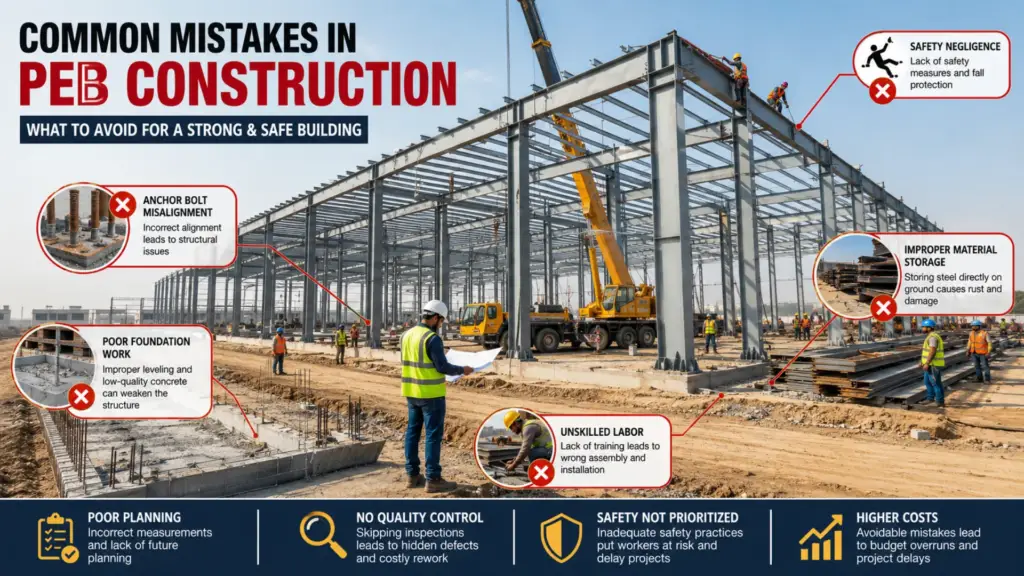
What Is PEB Construction and Why Accuracy Matters?
PEB (Pre-Engineered Building) construction is a modern building method where structural components are designed, manufactured, and assembled according to project requirements. These buildings are widely used for warehouses, factories, industrial sheds, logistics centers, and commercial facilities because they offer faster construction and cost efficiency.
A typical PEB project involves several important stages, including design and engineering, manufacturing of steel components, foundation work, and final erection and installation at the site. Each stage must be carefully planned and executed to ensure smooth project completion.
Accuracy is critical throughout the entire process. Even a small mistake in design, fabrication, foundation alignment, or installation can lead to delays, additional costs, structural issues, and safety concerns. That is why maintaining quality control and attention to detail at every stage is essential for the successful completion of a PEB construction project.
Inadequate Site Investigation and Soil Testing
One of the most common mistakes during PEB construction is not performing proper site investigation and soil testing before the project begins. Some builders skip soil testing to save time or reduce initial costs, while others fail to fully understand the site’s ground conditions. This often leads to incorrect foundation design recommendations.
Poor soil analysis can create serious problems later in the construction process. Weak or unstable soil may cause foundation settlement, uneven load distribution, and structural instability. Over time, these issues can result in cracks, repairs, project delays, and higher maintenance costs.
To avoid these risks, always conduct a professional geotechnical survey before construction starts. Soil testing provides accurate information about soil strength, bearing capacity, groundwater levels, and other site conditions. This helps engineers design the right foundation system and ensures the long-term safety and stability of the PEB structure.
Choosing an Inexperienced PEB Manufacturer or Contractor
One of the most common mistakes during PEB construction is selecting a manufacturer or contractor based only on the lowest price. While a cheaper quote may seem attractive, inexperienced vendors often lack the technical knowledge and project management skills needed to handle a PEB project efficiently.
This can lead to design mistakes, construction delays, and poor-quality workmanship that may increase costs later. In some cases, structural issues can also affect the safety and performance of the building.
To avoid these problems, always check the contractor’s experience in PEB construction. Review their completed projects, client feedback, technical capabilities, and industry certifications. Choosing an experienced and reliable PEB manufacturer helps ensure better quality, timely project completion, and long-term value for your investment.
3. Poor Project Planning and Requirement Analysis
One of the most common mistakes during PEB construction is poor planning at the project’s initial stage. Many businesses start construction without clearly defining their building requirements, future expansion plans, or operational workflow needs.
Common Issues
- Incorrect building dimensions
- Ignoring future expansion requirements
- Poor workflow and space utilization planning
Potential Consequences
- Operational inefficiencies
- Space limitations as the business grows
- Expensive modifications and extensions later
How to Avoid It
Before approving the design, carefully evaluate both current and future business requirements. Consider production capacity, storage needs, equipment placement, and possible future expansion. Proper planning ensures the building remains functional and cost-effective for years.
4. Foundation and Anchor Bolt Installation Errors
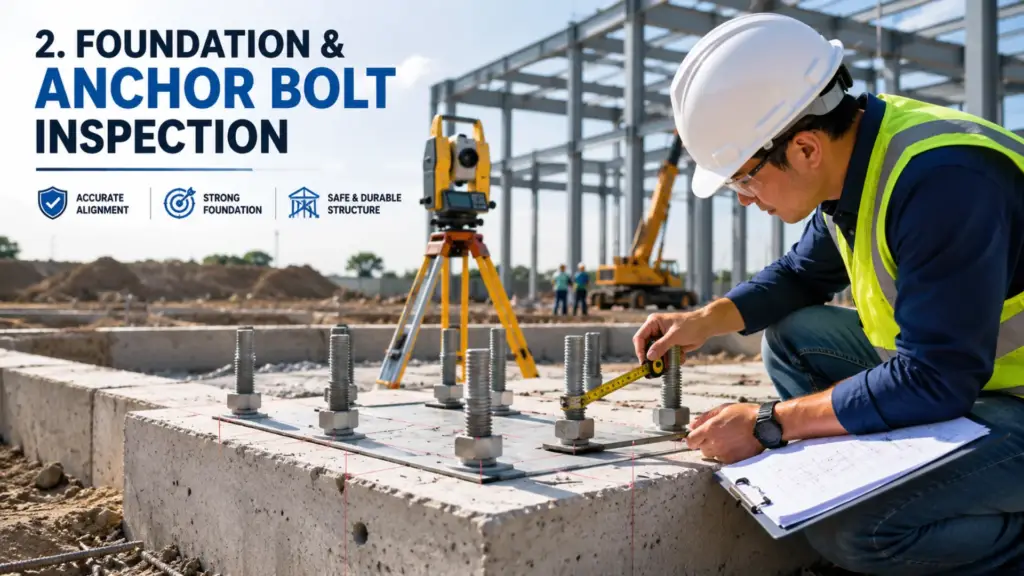
The foundation serves as the backbone of any PEB structure. Mistakes during foundation work can create major challenges during steel erection and impact overall structural alignment.
Common Issues
- Misaligned anchor bolts
- Incorrect foundation levels
- Poor concrete quality
Potential Consequences
- Difficulty during steel erection
- Structural alignment problems
- Project delays and additional costs
How to Avoid It
Conduct detailed inspections before steel installation begins. Verify anchor bolt locations, foundation dimensions, and concrete strength. Early quality checks help prevent costly corrections during later construction stages.
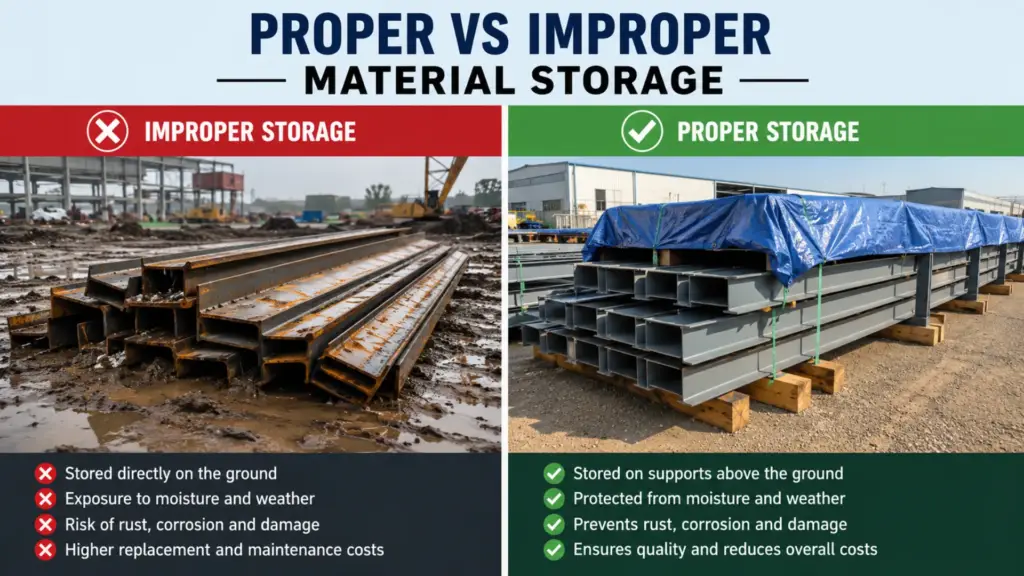
5. Improper Material Handling and Storage
PEB components are manufactured with precision and must be handled carefully before installation. Poor storage practices can damage materials and affect project quality.
Common Issues
- Storing steel directly on the ground
- Exposure to moisture and harsh weather
- Mishandling structural components during unloading
Potential Consequences
- Corrosion and rust formation
- Component damage and deformation
- Increased replacement and repair costs
How to Avoid It
Store steel components on raised supports and protect them from water exposure. Follow manufacturer-recommended handling and storage procedures to maintain material quality.
6. Hiring Unskilled Erection Teams
Even the best-designed PEB structure can face problems if installation is not performed correctly. Skilled erection teams are essential for safe and accurate construction.
Common Issues
- Lack of trained installers
- Improper assembly methods
- Failure to follow engineering drawings
Potential Consequences
- Safety hazards on site
- Structural defects
- Project delays and rework
How to Avoid It
Work only with experienced and certified erection teams. Qualified professionals understand installation procedures, safety requirements, and engineering specifications, ensuring smooth project execution.
7. Ignoring Quality Control and Inspections
Quality control is critical throughout every phase of PEB construction. Skipping inspections often leads to hidden defects that become costly problems later.
Common Issues
- Skipping stage-wise inspections
- Overlooking installation defects
- Lack of proper documentation
Potential Consequences
- Hidden structural problems
- Costly repairs and rework
- Reduced building performance
How to Avoid It
Implement a structured inspection process throughout construction. Regular quality checks help identify issues early and ensure compliance with project specifications.
8. Neglecting Workplace Safety Measures
PEB construction involves heavy steel components, cranes, and work at height. Ignoring safety protocols can put workers and the project at risk.
Common Issues
- Inadequate safety training
- Missing personal protective equipment (PPE)
- Unsafe lifting and installation practices
Potential Consequences
- Worker injuries and accidents
- Project stoppages
- Legal and financial liabilities
How to Avoid It
Establish strict site safety procedures, provide proper training, and ensure all workers use required safety equipment throughout the project.
Best Practices for Successful PEB Construction
Following industry best practices can significantly improve project quality, safety, and efficiency.
Essential Recommendations
✔ Conduct detailed site surveys before construction begins
✔ Choose experienced PEB manufacturers, engineers, and contractors
✔ Follow approved engineering drawings and specifications
✔ Ensure proper material storage and handling
✔ Maintain strict quality control throughout the project
✔ Prioritize worker safety at every stage
✔ Schedule regular project reviews and inspections
By implementing these practices, businesses can reduce risks, avoid costly mistakes, and achieve successful project completion within budget and schedule.
Quick PEB Construction Checklist
Before Construction
✔ Soil testing completed
✔ Design approved
✔ Permits obtained
During Construction
✔ Foundation verified
✔ Materials inspected
✔ Safety procedures followed
After Construction
✔ Final quality inspection completed
✔ Maintenance plan prepared
Conclusion
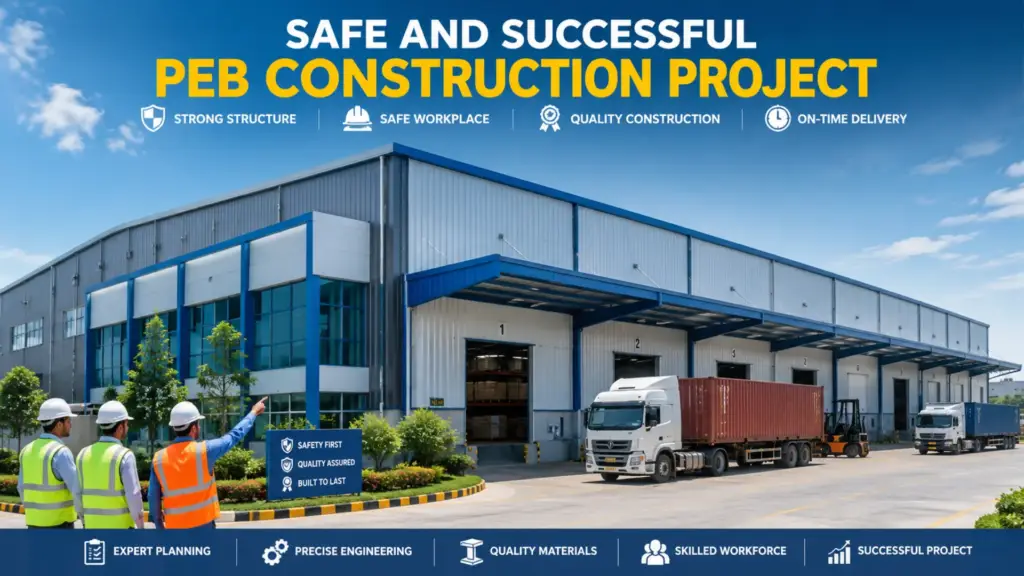
Successful PEB construction depends on proper planning, accurate execution, strict quality control, and a strong commitment to safety. Common mistakes such as poor project planning, foundation errors, improper material handling, hiring unskilled erection teams, and skipping inspections can lead to costly delays and structural issues.
By following industry best practices and working with experienced PEB manufacturers and contractors, businesses can ensure a durable, efficient, and long-lasting structure.
Planning a PEB project? Contact our team today for expert consultation and customized PEB building solutions tailored to your business needs.