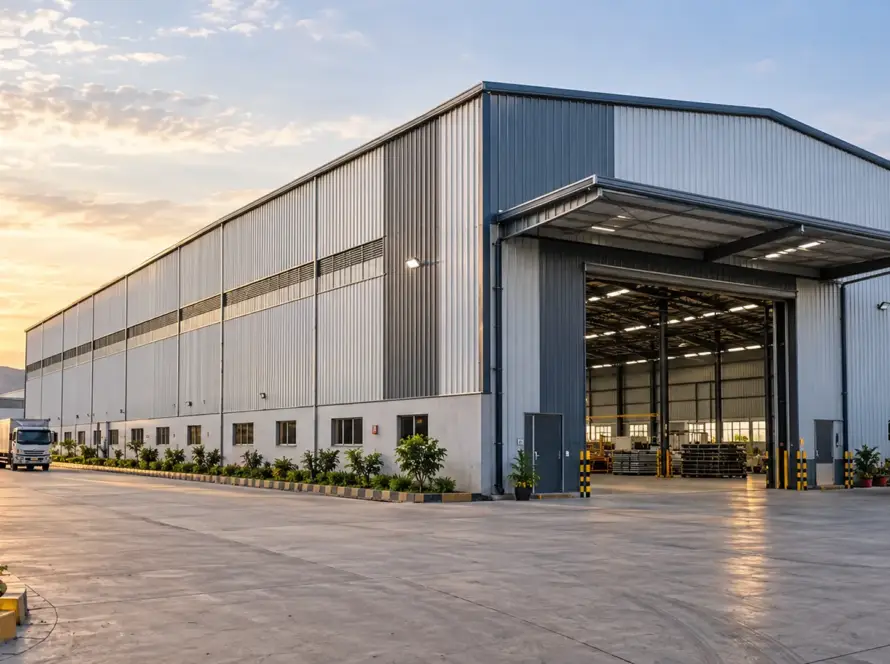
Pre-Engineered Buildings (PEBs) have become one of the most popular construction solutions for industrial, commercial, and warehouse projects. Their faster construction time, cost efficiency, and flexibility make them a preferred choice for businesses across various industries.
Today, PEB structures are widely used for warehouses, factories, manufacturing units, logistics centers, showrooms, and commercial facilities. However, before starting a project, it is important to understand the factors that affect PEB building cost.
Many people assume that PEB pricing depends only on the size of the structure, but several other factors influence the final budget. Design requirements, steel prices, location, cladding materials, and foundation conditions all play a significant role in determining project costs.
What Determines the Cost of a PEB Building?
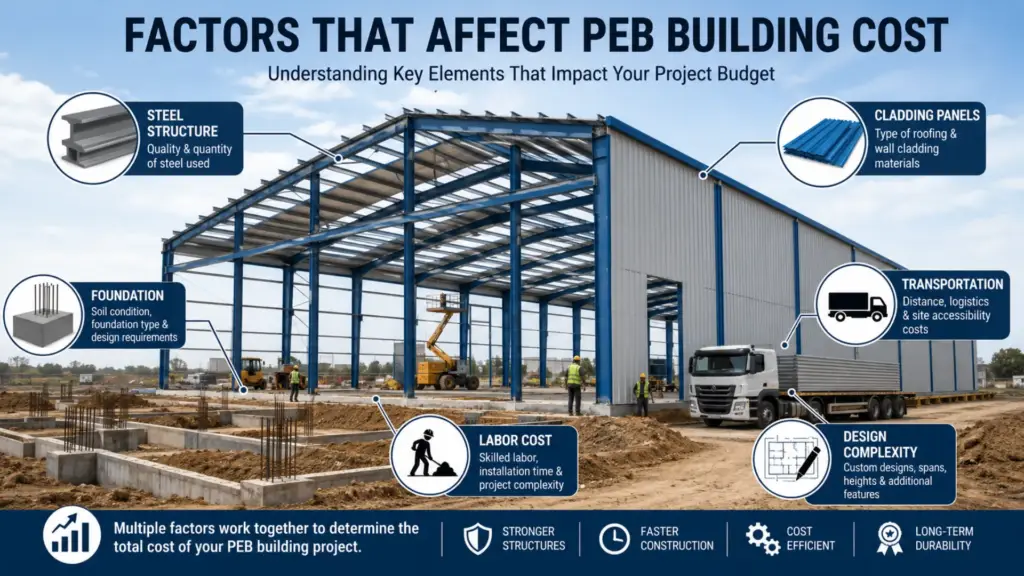
The cost of a PEB building is influenced by multiple factors working together. Every project has unique requirements, which means no two PEB buildings have exactly the same price.
The overall project cost depends on building dimensions, steel consumption, structural design, cladding selection, site conditions, installation requirements, and additional accessories. Understanding these elements can help project owners estimate budgets more accurately and make better decisions during the planning stage.
Let’s look at the major factors that affect PEB building cost in detail.
1. Building Size and Dimensions
One of the biggest factors affecting PEB building cost is the overall size of the structure.
The length, width, and height of the building directly influence the amount of steel and construction materials required. As the covered area increases, material consumption and fabrication costs also rise.
Wide-span buildings often require heavier structural sections because they must support larger clear spaces without intermediate columns. Similarly, taller buildings need stronger framing systems to handle additional loads and maintain structural stability.
For example, a warehouse with a span of 30 meters will typically require more steel than a smaller warehouse with a span of 15 meters. Therefore, larger and taller buildings naturally result in higher project costs.
2. Steel Prices and Material Costs
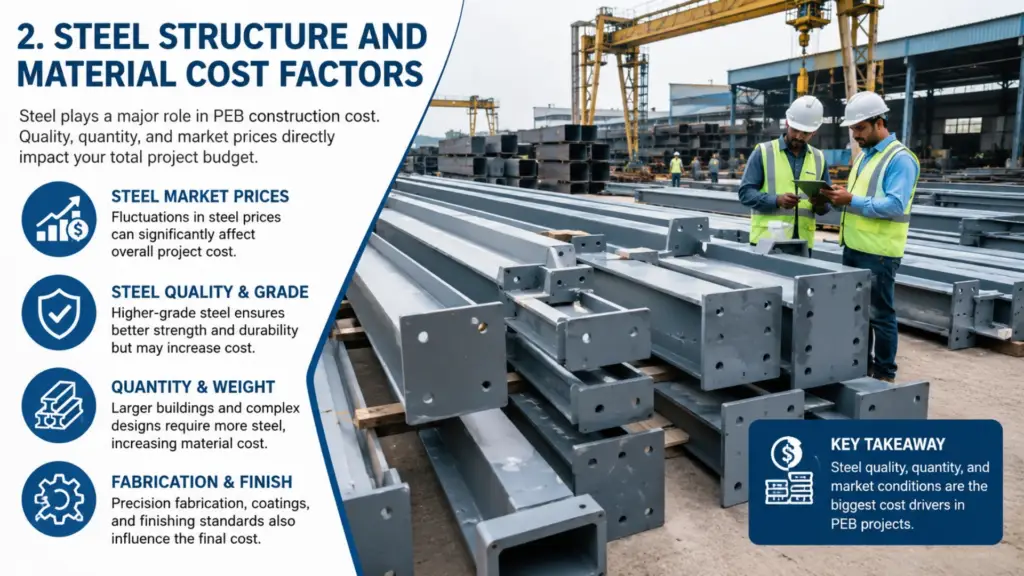
Steel is the primary component of a PEB structure and usually represents a significant portion of the total project cost.
Steel prices can fluctuate due to market demand, raw material availability, transportation costs, and global economic conditions. Even small changes in steel rates can have a noticeable impact on the overall budget of a large project.
The quality and grade of steel also influence pricing. Higher-grade steel may cost more initially but often provides better strength, durability, and long-term performance.
Because steel prices change regularly, obtaining updated quotations before project execution is essential for accurate cost estimation.
3. Building Design and Structural Complexity
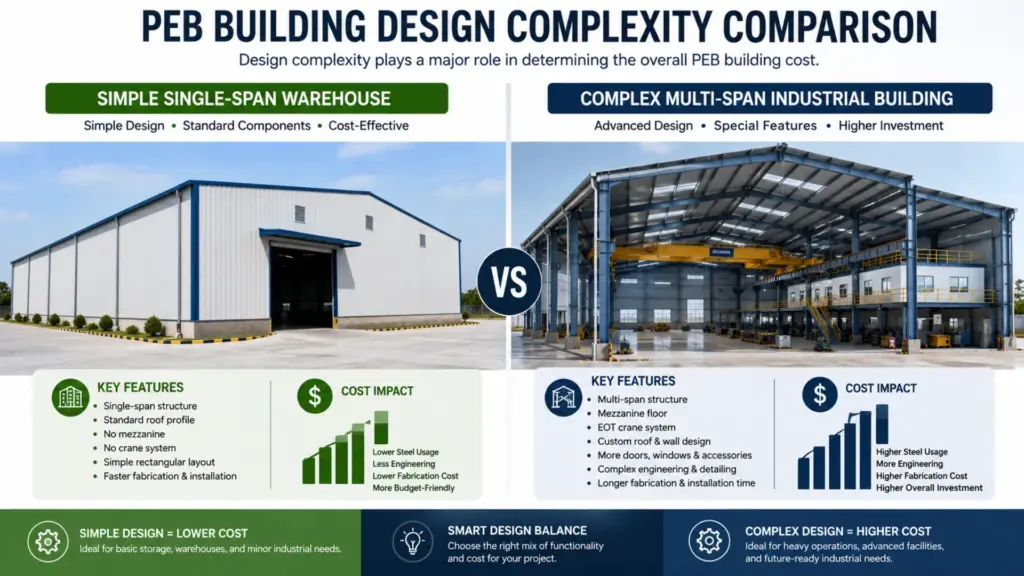
The complexity of the building design plays a major role in determining project costs.
Simple rectangular warehouses are generally more economical than structures with custom layouts and advanced architectural features. Elements such as multi-span configurations, mezzanine floors, canopies, curved roofs, and customized elevations require additional engineering and fabrication work.
More complex designs often involve extra structural members, detailed connections, and specialized manufacturing processes. These requirements increase both material usage and fabrication costs.
While customized designs can improve functionality and appearance, they typically result in higher overall project expenses compared to standard PEB configurations.
4. Roof and Wall Cladding Selection
The type of cladding used for roofs and walls significantly affects PEB building cost.
Common cladding options include galvanized sheets, color-coated sheets, PUF panels, and sandwich panels. Each material offers different levels of durability, insulation, and performance.
Basic metal sheets are generally the most economical option. However, insulated solutions such as PUF panels and sandwich panels provide better thermal efficiency, noise reduction, and indoor comfort.
Although premium cladding materials increase upfront investment, they can reduce long-term energy expenses and maintenance costs. Choosing the right cladding depends on the building’s purpose, operating conditions, and budget.
5. Wind Load and Seismic Requirements
Every PEB structure must be designed according to local wind and seismic conditions.
Buildings located in high-wind regions or earthquake-prone zones require stronger structural systems to meet safety standards. This often involves heavier steel sections, additional bracing, and reinforced connections.
The higher the design loads, the more steel is needed to ensure structural stability and compliance with building codes.
As a result, projects located in challenging environmental zones generally have higher construction costs compared to structures built in low-risk areas.
6. Foundation and Soil Conditions
The condition of the construction site has a direct impact on foundation costs.
Factors such as soil bearing capacity, site preparation requirements, excavation depth, and foundation design must be carefully evaluated before construction begins.
If the soil is weak or unstable, larger and stronger foundations may be required to safely support the structure. Additional ground improvement work can also increase project expenses.
Foundation costs vary significantly from site to site. Therefore, conducting a proper soil investigation before finalizing the design is an important step in cost planning.
7. Cranes, Accessories, and Additional Features
Many industrial PEB buildings require specialized accessories and equipment to support operations.
Common additions include:
- EOT cranes
- Gantry cranes
- Skylights
- Turbo ventilators
- Louvers
- Rolling shutters
- Insulation systems
These features improve functionality, ventilation, lighting, and operational efficiency. However, they also add to material, fabrication, and installation costs.
For example, a warehouse with heavy-duty crane systems will typically cost more than a standard storage facility without crane provisions. The more specialized the requirements, the higher the overall project budget.
8. Project Location and Transportation Costs
Project location is another important factor that influences PEB building cost.
Transportation expenses depend on the distance between the manufacturing facility and the project site. Remote locations often require higher logistics costs due to increased travel distances and handling requirements.
Site accessibility can also affect installation efficiency. Difficult terrain or limited access may require additional equipment and labor during construction.
In some regions, labor availability and local infrastructure can further influence overall project expenses.
Labor and Installation Charges
Labor and erection costs vary based on project size, complexity, and location.
Simple structures can usually be installed quickly, while larger or more complex projects require experienced erection teams and longer construction periods.
Regional labor rates differ significantly, which can impact the final project budget. Projects involving cranes, multi-level structures, or special installation requirements often need additional manpower and technical expertise.
Efficient project planning and skilled installation teams can help reduce delays and control overall construction costs.
How to Reduce PEB Building Costs Without Compromising Quality
Reducing costs does not always mean sacrificing quality. Smart planning can help optimize budgets while maintaining performance and durability.
Here are a few practical ways to reduce PEB building costs:
- Optimize building dimensions for efficient steel usage.
- Choose cladding materials based on actual operational needs.
- Avoid unnecessary architectural complexity.
- Plan future expansion requirements during the initial design stage.
- Work with an experienced and reliable PEB manufacturer.
These strategies can improve budget control, minimize material wastage, and provide better long-term value for your investment.
Sample PEB Cost Breakdown Example
Consider a warehouse project with a built-up area of approximately 10,000 square feet.
A typical cost distribution may include:
- Structural steel framework: 45–55%
- Foundation and civil work: 15–20%
- Roof and wall cladding: 15–20%
- Accessories and additional features: 5–10%
- Installation and erection: 5–10%
The exact percentages vary depending on project specifications, location, and design requirements. This example helps illustrate how different components contribute to the total project cost.
Conclusion
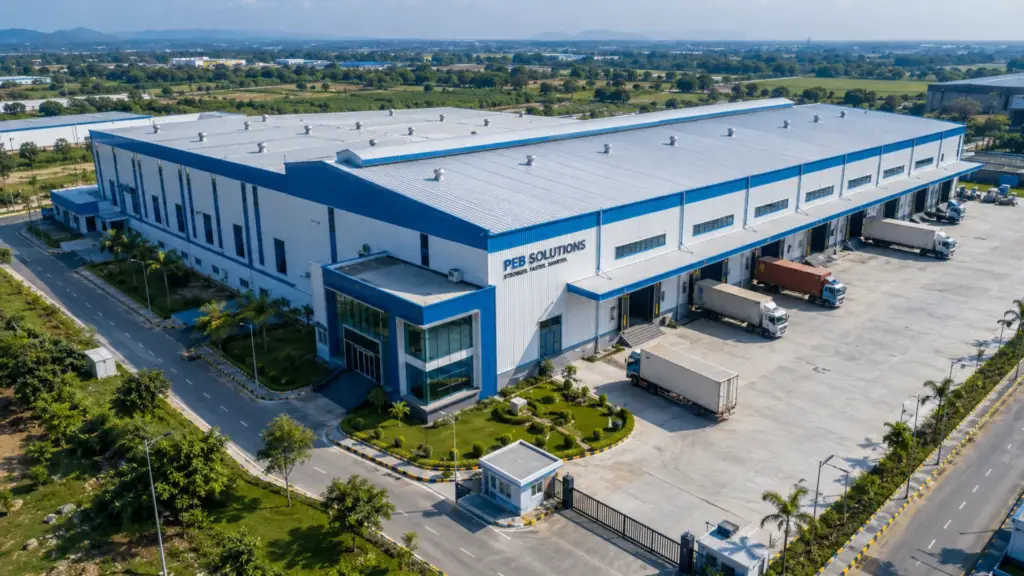
Understanding the factors that affect PEB building cost is essential for accurate budgeting and successful project planning.
Building size, steel prices, structural complexity, cladding materials, foundation requirements, environmental loads, accessories, location, and labor costs all influence the final project investment.
Since every project has unique requirements, obtaining a detailed cost analysis from experienced professionals is the best way to estimate expenses accurately.
If you are planning a warehouse, factory, industrial shed, or commercial building, contact a trusted PEB manufacturer for a customized quotation and expert guidance tailored to your project needs.
FAQ Section
PEB building costs vary depending on design, materials, location, and project requirements. The actual cost can only be determined after evaluating all project specifications.
Steel prices and building dimensions are typically the biggest factors because they directly impact material consumption.
Yes. Insulated panels such as PUF and sandwich panels increase upfront costs but can improve energy efficiency and reduce long-term operating expenses.
You can reduce costs by optimizing building dimensions, simplifying design requirements, selecting suitable materials, and planning future expansion early.
In many cases, yes. PEB structures often offer faster construction, lower material wastage, reduced labor requirements, and better overall project efficiency compared to traditional construction methods.